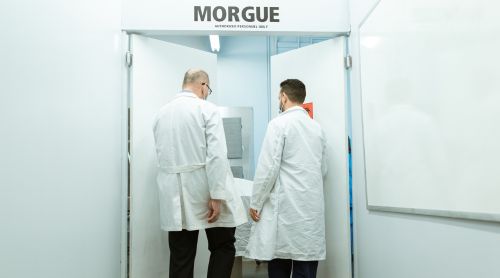
Training future embalmers to uphold the highest standards of care and professionalism is crucial in the ever-evolving funeral industry. Mentorship, combined with effective teaching strategies, plays a vital role in preparing new embalmers to honor the dignity of the deceased, meet modern funeral expectations, and navigate changing cultural and regulatory demands.

Related: Preparing New Embalmers
History of embalmer training
Embalming, with its rich and deeply rooted cultural history, is often associated with the ancient Egyptian era. However, the Chinchorro culture in South America also practiced mummification as early as 5000-6000 BCE.
The American Civil War marked the introduction of embalming techniques resembling modern-day methods, focusing on three core principles.
- Disinfect the body
- Preserve the body
- Restore the deceased’s appearance for viewing
Surgeons historically used arsenic-based chemicals to remove fluids and disinfect corpses. Modern embalming achieves similar outcomes with more advanced techniques and chemicals.
Influential Western embalmers across the centuries
Several prominent figures contributed to the recognition of embalming.
Frederick Ruysch (1638-1731)
The Dutch botanist and anatomist was influential in the development of preservation techniques for anatomical specimens, especially arterial embalming. He primarily taught surgeons and midwives. “Ruysch’s main trick was heating white wax and injecting it into blood vessels in liquid form. Once it cooled and set, he would have a dissectible preparation. By staining the wax red, he managed to give bodies and organs a lifelike tint.” (Luuc Kooijmans, The Public Domain Review, March 5, 2014).
William (1718-1783) and John Hunter (1728-1793)
William, a pioneer in documenting detailed embalming techniques, helped establish it as a recognised body preservation method. He gave public lectures and taught private anatomy courses. William’s brother, John, was a highly acclaimed leading surgeon, serving King George III and as Surgeon-General in the British Army.
John Hunter employed his brother’s embalming method to preserve Mary Van Butchell, whose wealth went to her husband, provided her body remained above ground. He publicly displayed her embalmed body in a glass-topped case in a sitting room.
Dr. Thomas Holmes (1817-1900)
While studying under a phrenologist, Dr. Thomas Holmes examined Egyptian mummies. He developed an arsenic-based embalming fluid, which he later utilized during the American Civil War to preserve soldiers’ bodies for transport and display in their hometowns. His pioneering work earned him the title of ‘Father of Modern Embalming,’ having embalmed over 4,000 bodies during the war.
The commercialization of embalming
In the 18th century, UK surgeons were already practicing arterial-injection embalming. However, the American Civil War elevated embalming as a recognized trade.
The war caused hundreds of thousands of deaths. With many soldiers dying far from home, preserving the bodies became necessary for long-distance travel. Surgeons and pharmacists experienced in tissue preservation charged up to $100. Sometimes, setting up near battlefields and offering soldiers the chance to pre-pay.
The Civil War, followed by Abraham Lincoln’s embalming, led to embalming becoming a mainstream practice. Mourners waited hours to pay their respects to Lincoln’s embalmed body throughout the long funeral train.
Related: Advanced Embalming
The first college of mortuary science
A rising demand for embalming services triggered calls to improve and standardize procedures. In 1882, Joseph Henry Clarke, a traveling salesman for a coffin company, established the Clarke School of Embalming. It was the first of its kind and earned Clarke the title ‘‘Father of American Embalming Schools.”
Today, it operates as the Cincinnati College of Mortuary Science (CCMS), a recognized institution accredited by the American Board of Funeral Service Education (ABFSE) for its high levels of mortuary science education.
Comprehensive modern embalming education
The journey to becoming a skilled embalmer begins with a mortuary science education, which provides essential theory and practical skills. Encouraging new embalmers to complete formal training helps ensure they enter the field well-prepared.
The ABFSE, established in 1962 and recognized by the U.S. Department of Education, accredits institutions that provide funeral services and mortuary science programs. It aims to enhance and guarantee the quality of funeral service education, preparing students for careers in the industry.
Pre-employment expectations for new embalmers
The funeral industry is undergoing a period of transition as seasoned practitioners retire and new embalmers emerge. “According to a 2023 survey of National Funeral Directors Association (NFDA) members, nearly half (45.9%) plan to retire within the next five years.” (NFDA, June 6, 2024)
This trend presents a valuable opportunity for veteran embalmers to actively shape the funeral service by mentoring and supporting the next generation of funeral professionals.
Embalming is a skilled art that requires a compassionate approach. During interviews, it’s essential to clearly communicate pre-employment expectations that align with the industry’s principles and the specific needs of the individual funeral home.
Clarity helps candidates evaluate their fit and commitment by highlighting the role’s distinct challenges, including unsociable hours, emotional demands, and the need to follow strict health and safety protocols. This open communication fosters a culture of trust, reduces turnover, and helps build an efficient and well-equipped team. It reflects the funeral home’s professionalism and transparency from the outset.
Benefits of mentorship programs for new embalmers
As the funeral industry morphs into a more community-focused service. Directors adopting a more personal approach accumulate invaluable knowledge. They gain deeper insights into diverse beliefs and cultural perspectives on death. Mentorship offers a meaningful way to pass this expertise to the next generation.
Workplace mentors guide new embalmers through their job responsibilities and expectations. Following a structured roadmap with clear learning objectives and regular check-ins for discussions and reflections allows for real-time observation, feedback, and skill-building in a supportive environment.
Mentorship benefits both mentors and mentees. Mentors gain fresh insight into younger people’s views on death and dying, including preferences for eco-friendly funerals and changing attitudes to embalming. Instrumental factors that can help funeral directors determine the future of their business.
Hands-on embalming training
Embalmers frequently interact with grieving families, making it essential to adopt respectful and appropriate language. While specific industry jargon among funeral colleagues is acceptable, learning clear and compassionate terms to use with mourners demonstrates empathy and professionalism. This thoughtful approach helps families feel understood and supported during difficult times.
While college training provides a robust footing for new embalmers, stepping into a funeral home can be intimidating. They face new challenges.
- Witnessing the impact of death on loved ones can create an emotional burden, particularly if children are involved.
- More distressing cases, such as infant bodies and those that have experienced severe head trauma and advanced decomposition. These require more specialized skills for preparing the deceased for presentation.
- Coordinating between funeral directors, families, crematoriums, transportation providers, and other professionals can present logistical challenges, all of which are crucial for a seamless funeral service.
Embalmer continuing education requirements
Continuing education is essential for embalmers to remain current on the latest advancements in preservation methods, chemicals, equipment, and health and safety. It strengthens skills in specific areas, such as restorative arts and disaster mortuary operations, improving career opportunities.
Some states mandate CE for embalmers and funeral directors to maintain their licenses. The required hours and timeframes vary by state.
Training and preparing new embalmers should progress gradually, helping build confidence without feeling overwhelmed.