Do you care about helping people during their most difficult moments? A career in deathcare offers a unique opportunity to provide compassion, dignity, and support to families when they need it most. While it requires a special kind of resilience, the deathcare industry provides stable, meaningful work with clear paths for professional growth.
If you’re looking for a profession that combines science, service, and empathy, exploring careers in deathcare might be your next step. Let’s look at some of the key roles within this vital industry.

Funeral director
Funeral directors act as the primary point of contact for grieving families. They manage the logistics of funeral services, ensuring everything runs smoothly and according to the family’s wishes.
- Duties. A funeral director coordinates the transportation of the deceased, prepares legal documents, and helps families select caskets or urns. They also organize the funeral service itself, handling details like flowers, music, and clergy coordination. Beyond logistics, they provide emotional support and guidance to bereaved relatives.
- Training and licensing. Most states require an associate degree in mortuary science. Following your education, you must complete an apprenticeship lasting one to three years. Finally, you will need to pass a state or national board exam to obtain licensure.
- Work environment. You will typically work in funeral homes or crematories. The environment is quiet, respectful, and professional.
- Average salary. The average annual salary for a funeral director sits around $58,000 to $76,000, though this varies by location and experience level.
Mortician and embalmer
While often used interchangeably with “funeral director,” the roles of mortician and embalmer focus more specifically on preparing the body for burial or viewing.
- Duties. Embalmers use chemical solutions to preserve the body and slow decomposition. They also perform restorative art to recreate natural features, applying makeup and dressing the deceased to ensure a peaceful appearance for open-casket services. A mortician often handles both funeral directing duties and the preparation of the body.
- Training and licensing. Like funeral directors, embalmers usually need an associate degree in mortuary science. You will study anatomy, pathology, and restorative art. Practical experience through an apprenticeship is crucial, followed by passing a licensure exam.
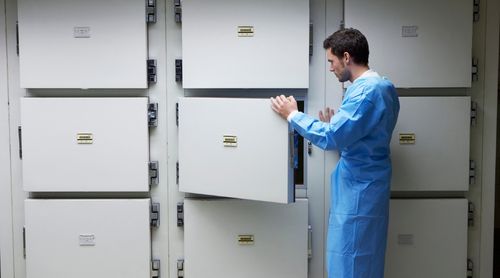
- Work environment. Embalmers work in preparation rooms within funeral homes, hospitals, or medical schools. These environments are clinical, sterile, and require strict adherence to health and safety regulations.
- Average salary. Embalmers earn an average salary between $45,000 and $65,000 per year.
Coroner
A coroner plays a critical legal and medical role in deathcare. They determine the cause and manner of death, especially in cases that are sudden, unexpected, or suspicious.
- Duties. Coroners investigate deaths, order autopsies, and collect evidence. They complete death certificates and may testify in court regarding their findings. Unlike funeral directors, their primary responsibility is to the law and public health rather than directly to the grieving family.
- Training and licensing. Requirements for coroners vary significantly by jurisdiction. In some areas, coroners are elected officials and may not require specific medical degrees, though a background in law enforcement or medicine is helpful. Medical examiners, who perform similar duties, are appointed and must be physicians (typically forensic pathologists).
- Work environment. Coroners work in government offices, crime scenes, and morgues. The work can be physically demanding and emotionally taxing due to the nature of the investigations.
- Average salary. Salaries fluctuate widely based on jurisdiction and whether the role is elected or appointed. Generally, coroners can expect to earn between $60,000 and $100,000 annually.
Conclusion
Careers in deathcare offer a stable path with the chance to make a genuine difference. Whether you prefer the scientific aspect of embalming or the service-oriented role of a funeral director, this industry values dedication and compassion.
If you’re ready to start your journey, flexible learning options exist to help you achieve your goals. Research local mortuary science programs today and take the first step toward a rewarding future in deathcare.