Quick answer: Becoming an ICU nurse requires an RN license, typically 1–2 years of general nursing experience, and specialized critical care training. ICU nurses manage hemodynamically unstable patients, operate complex monitoring equipment, and work within high-acuity interdisciplinary teams. Structured training programs can significantly accelerate a successful transition into critical care.

Critical care nursing is one of the most demanding and rewarding specialties in the profession. ICU nurses work at the highest levels of clinical complexity, caring for patients whose conditions can change within minutes. For many nurses, it’s the ultimate test of skill, judgment, and composure under pressure.
So, what does it actually take to get there? This guide covers everything you need to know: what ICU nurses do day to day, the skills required, how to make the transition, and how structured continuing education can help you prepare.
Unlock your nursing career potential with CE membership options from Elite
What does an ICU nurse do?
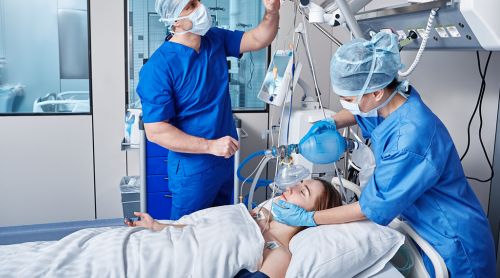
ICU nurses provide continuous, high-acuity care to critically ill patients. Their responsibilities go well beyond standard nursing tasks. On any given shift, an ICU nurse might interpret arterial line waveforms, manage mechanical ventilation, titrate vasoactive medications, and communicate urgent updates to an interdisciplinary team, all while monitoring for early signs of deterioration.
Key responsibilities include:
- Monitoring hemodynamic data, including central venous pressure and mean arterial pressure
- Managing mechanically ventilated patients, including airway maintenance and alarm response
- Safely administering and titrating vasoactive medications, sedation, and analgesia
- Recognizing early signs of sepsis, acute respiratory failure, and neurological decline
- Communicating using structured handoff tools like SBAR
- Collaborating with physicians, respiratory therapists, and other specialists
The pace is fast, the stakes are high, and the clinical judgment required is exceptional. That’s what makes preparation so important.
How is ICU nursing different from med-surg?
Med-surg nursing builds a strong clinical foundation, but the ICU operates differently. Here’s how the two compare:
| Med-surg | ICU | |
| Patient ratio | Typically 4–6 patients | Usually 1–2 patients |
| Acuity | Stable to moderately ill | Critically ill, hemodynamically unstable |
| Monitoring | Routine vitals and assessments | Continuous invasive and non-invasive monitoring |
| Interventions | Standard medication administration, wound care | Ventilator management, vasoactive drips, arterial lines |
| Decision-making | Protocol-driven | Requires real-time clinical reasoning |
The transition from med-surg to the ICU is one of the most common specialty changes nurses make. It’s a meaningful step up, and it requires targeted preparation to close the practice gap.
What skills do ICU nurses need?
Becoming a competent ICU nurse means developing both technical and non-technical skills. The most critical ones include:
- Hemodynamic monitoring: Reading and interpreting arterial lines, CVP, and MAP to identify instability
- Mechanical ventilation: Understanding ventilator modes, alarm parameters, and safe airway management
- Pharmacology: Managing vasoactive drugs, sedation protocols, and analgesic titration safely
- Critical thinking: Recognizing early warning signs and responding quickly and effectively
- Communication: Delivering structured handoffs (SBAR), talking with families in high-stress situations, and collaborating across disciplines
- Situational awareness: Continuously scanning the environment and patient status to anticipate changes
These skills aren’t built overnight. They develop through education, clinical experience, and deliberate practice.
How long does it take to become an ICU nurse?
There’s no single timeline, but here’s a realistic breakdown:
- Earn your RN license: Complete an ADN or BSN program and pass the NCLEX (typically 2–4 years)
- Gain clinical experience: Most ICUs prefer 1–2 years of general nursing experience before hiring into critical care
- Complete ICU-specific training: Structured continuing education courses and hospital-based orientation programs typically run 3–6 months
- Pursue certification (optional but valuable): The CCRN credential from AACN requires 1,750 hours of direct care in acute/critical care within the past 2 years
Total timeline from nursing school to ICU: approximately 3–6 years, depending on your path and experience level.
Can you become an ICU nurse as a new grad?
Some hospitals do offer new graduate ICU programs, particularly at larger academic medical centers. These programs pair new nurses with experienced preceptors and extend orientation timelines significantly, often 6 months or more.
That said, new grad ICU positions are competitive and not universally available. Many nurses find it beneficial to spend 1–2 years in a step-down unit, progressive care unit, or med-surg setting first. That foundational experience builds the clinical reasoning skills that critical care demands.
Choose a new grad ICU program if one is available and you’re committed to intensive mentorship from day one. Choose a step-down or med-surg role first if you want a stronger foundation before entering the high-acuity environment.
How to prepare for an ICU nursing role with Transitions in Practice
Whether you’re a new grad exploring critical care or an experienced med-surg nurse ready to make a move, structured preparation makes a real difference. That’s exactly what the Transitions in Practice: ICU Nurse Training course from Elite Learning is designed to provide.
What the course covers
This continuing education course, developed by Shirley Aycock, DNP, RN, addresses the specific competencies needed for safe, effective ICU practice. Topics include:
- Interpreting hemodynamic monitoring data, including arterial line waveforms, CVP, and MAP
- Understanding mechanical ventilation principles, common ventilator modes, and nursing responsibilities
- Safe administration of vasoactive medications, sedation, and analgesia, including titration and adverse effect recognition
- Recognizing early signs of critical complications like sepsis, acute respiratory failure, and neurological deterioration
- Applying structured communication strategies, including SBAR handoffs and family communication in high-acuity situations
The course uses scenario-based learning and evidence-based frameworks aligned with AACN Synergy Model competencies, helping nurses develop the situational awareness and clinical reasoning skills the ICU demands.
It’s appropriate for RNs who are new to the ICU, nurses transitioning from med-surg or step-down settings, and experienced nurses who want to formalize their foundational critical care knowledge.
Part of the Transitions in Practice membership feature
The ICU course is available as part of the Transitions in Practice feature within the Elite Nursing Passport CE Membership. This feature includes specialty and role transition CE courses for ICU, med-surg, and ER settings, with more specialties coming soon.
Each course spans approximately 5 CE credit hours and is designed to help nurses of all levels transition to a new unit or specialty. Courses review essential unit-specific skills, common conditions, daily workflow, team communication, and more. Members can also assess their readiness with a personal assessment and online shift simulation.
The Elite Nursing Passport CE Membership gives you access to 300+ ANCC-accredited courses, specialty certification exam prep, nursing interview simulation with the Rubi™ Coach, a resume builder (coming soon), and a career path planning tool (coming soon) all in one place, self-paced, and accessible on any device.
Your next step into critical care
Transitioning to ICU nursing is a significant career move, and getting there requires more than motivation. It takes clinical knowledge, critical thinking, and the right preparation.
The Transitions in Practice: ICU Nurse Training course gives you a clear, structured path forward, whether you’re just starting to explore critical care or actively preparing for your first ICU role. Pair it with the full suite of tools in the Elite Nursing Passport CE Membership, and you’ll have everything you need to make a confident, competent transition.
Ready to take the next step? Explore the Elite Nursing Passport CE Membership and start your ICU training today.
Frequently asked questions
How long does it take to become an ICU nurse?
Most nurses take 3–6 years from nursing school to working independently in the ICU. This includes completing an RN program, passing the NCLEX, gaining 1–2 years of general nursing experience, and completing ICU-specific orientation and training.
Can you become an ICU nurse as a new grad?
Yes, some hospitals offer new graduate ICU programs with extended orientation and dedicated preceptorship. However, these positions are competitive. Many nurses benefit from building foundational skills in a step-down or med-surg role before transitioning to critical care.
What skills do ICU nurses need?
ICU nurses need strong competency in hemodynamic monitoring, mechanical ventilation management, vasoactive medication administration, critical thinking, structured communication (SBAR), and situational awareness. Both technical skills and clinical judgment are essential.
Do I need critical care certification to work in the ICU?
No. Certification, such as the CCRN from the American Association of Critical-Care Nurses (AACN), is not required to work in the ICU. However, it demonstrates advanced knowledge and may be required or preferred for advancement in some settings. The CCRN requires 1,750 hours of direct care in acute/critical care within the past 2 years.
How is ICU nursing different from med-surg?
ICU nurses typically care for 1–2 patients at a time, compared to 4–6 in med-surg. Patients in the ICU are hemodynamically unstable and require continuous invasive monitoring, ventilator management, and complex medication titration. ICU nursing demands a higher level of real-time clinical decision-making than general medical-surgical nursing.