October has a way of turning attention toward the strange and the macabre, and healthcare has more than its share of both. Long before germ theory, clinical trials, and peer review, the people who cared for the sick worked from a very different toolkit: omens, humors, and a handful of medical superstitions that felt like solid science at the time.
Revisiting them now offers more than a seasonal thrill. These are medical superstitions debunked not by internet skeptics but by centuries of clinical observation, autopsy, and, eventually, the scientific method. Here are 13 practices that once passed for legitimate medicine, why practitioners believed in them, and when the profession finally moved on.
Trepanation: Drilling into the skull to release evil spirits
Trepanation, the deliberate boring or scraping of a hole into a living skull, ranks among the oldest documented medical interventions, with evidence stretching back to Neolithic times. In some ancient societies, people believed the procedure released evil spirits blamed for a person’s illness. The bone removed was sometimes kept and worn as a protective charm.
The practice carried both a practical and a magical purpose. Healers used it to treat head trauma and seizures, but they also framed it as a way of expelling the spirit thought to cause mental illness, epilepsy, or migraine.
The superstitious framing didn’t disappear quickly. Medieval physicians continued to perform the procedure specifically to release demons they believed were trapped inside a patient’s head, particularly in cases of what looked like mental illness.
The shift away from spirit-release justifications came gradually, as anatomists like Galen began describing the skull and brain in mechanical rather than mystical terms. Gradually, trepanation narrowed into a legitimate technique for relieving pressure after skull fracture, a use that eventually evolved into modern neurosurgery.
Bloodletting: Draining “excess” blood to rebalance the body
Rooted in the theory of the four humors, bloodletting held that illness came from an imbalance of blood, phlegm, and black and yellow bile, and that draining blood restored the balance. The practice traced back to ancient Egypt and was popularized by Hippocrates and Galen, remaining standard treatment through the Middle Ages for everything from gout to smallpox and plague.
The habit proved remarkably durable. Bloodletting and leeching reached a fever pitch in the early nineteenth century under the banner of “heroic medicine.” The practice was so central to the profession that the renowned science journal The Lancet took its name from the bloodletting knife when it launched in 1823.
The turn came when French physician Pierre-Charles-Alexandre Louis began applying statistical analysis to hospital records. His 1828 findings on pneumonia patients suggested bloodletting wasn’t nearly as effective as its defenders claimed. English physiologist Marshall Hall published a formal denunciation of the practice in 1830.
Even so, change was slow: a widely used 1942 medical textbook still listed bloodletting as an acceptable treatment for pneumonia. Today, therapeutic phlebotomy survives only for a small number of evidence-based indications, like hemochromatosis.
Miasma theory: Blaming “bad air” for disease
For more than two thousand years, physicians believed that foul-smelling air, or miasma, rising from rotting matter and sewage caused disease. The theory held that epidemics like cholera and plague came from noxious vapors emanating from decaying organic matter, human and animal breath, and other bad odors. It wasn’t baseless intuition. Filth and disease genuinely clustered together, which made the smell-based explanation feel confirmed by experience.
The theory’s dismantling came from public health detective work as much as laboratory science. John Snow’s investigation of London’s 1854 cholera outbreak pointed toward contaminated water rather than air. In the 1860s and 1870s, Louis Pasteur and Robert Koch demonstrated that specific microorganisms, not smell, caused specific diseases.
By 1880, miasma theory had been largely abandoned in favor of germ theory. At that point, however, the sanitation reforms it inspired, including better sewers and cleaner water, had already been quietly reducing disease spread for the wrong reasons.
Plague doctor masks: Fighting bad air with a beak full of herbs
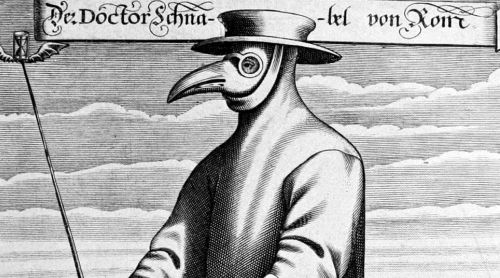
The plague doctor’s beaked mask, now a staple of Halloween imagery, was a direct product of miasma theory. Credited to French physician Charles de Lorme around 1619, the costume covered the wearer head to toe in leather or waxed canvas and included a long beak packed with aromatic spices, dried flowers, or a vinegar-soaked sponge meant to purify incoming air.
De Lorme believed the beak’s length gave protective herbs enough time to neutralize the bad air before it reached the wearer’s lungs. Some masks were stuffed with theriac, a compound of more than fifty ingredients including viper flesh and myrrh.
The mask offered accidental protection, just not for the reason anyone intended. Modern analysis confirms the herb-packed beak did little to stop the bacterium that actually causes plague. However, the full-coverage waxed leather suit likely did provide some real defense against the flea bites that spread the disease. The costume faded out along with miasma theory itself in the late 1800s, once Yersinia pestis was identified as the true culprit.
The doctrine of signatures: Letting a plant’s shape prescribe its use
This doctrine held that a plant’s physical resemblance to a body part revealed which ailment it could treat. Bloodroot’s scarlet roots were thought to treat circulatory conditions. Mandrake’s resemblance to male anatomy suggested a use for infertility, with the idea formalized by medieval physicians who believed a creator had built these visual clues into nature on purpose.
Skepticism arrived earlier than one might expect. Dutch physician Rembert Dodoens dismissed the doctrine as early as 1583, calling it too changeable and uncertain to be trusted. The idea lingered in folk practice for centuries afterward, but as pharmacology matured into an empirical discipline in the eighteenth and nineteenth centuries, the doctrine lost its footing in mainstream medicine. A few of its guesses turned out right by coincidence (walnuts do contain fatty acids tied to brain health), which is likely part of why the idea proved so sticky.
Mercury for syphilis: “A night with Venus, a lifetime with mercury”
From the sixteenth century onward, mercury was the standard treatment for syphilis, applied as an ointment, vapor, or oral dose. The old saying “a night with Venus, a lifetime with mercury” captured how entrenched the treatment had become by the time it was widely used in cities like Dublin in the 1830s. The logic wasn’t entirely superstition, since mercury can kill the syphilis spirochete, but the effective dose was also a toxic one.
Patients suffered mouth ulceration, tooth loss, tremors, kidney failure, and in many cases death from the treatment rather than the disease it targeted. The decline began with less toxic alternatives: potassium iodide was tried alongside mercury in 1854, and bismuth salts followed as a safer, more effective option.
Paul Ehrlich’s 1909 arsenic-based Salvarsan offered the first real breakthrough. Unfortunately, mercury and heavy-metal therapies weren’t fully abandoned until penicillin proved curative in 1943.
Tobacco smoke enemas: Reviving drowning victims through the rectum
Eighteenth-century rescuers believed that blowing tobacco smoke into a drowning victim’s rectum could restart breathing through warmth and stimulation. Physician Richard Mead was among the first Western scholars to recommend the technique in 1745. By the 1780s the Royal Humane Society had installed resuscitation kits with bellows for administering the enema at points along the River Thames. The idea was borrowed from Indigenous American practices that European settlers observed and misapplied.
Rescue societies of the era reported a 70 percent success rate across more than 2,500 attempts. What state the “drowned” people were actually in likely varied widely. Doubts crept in by the 1780s, and the practice’s undoing came from animal experimentation. Benjamin Brodie’s 1811 experiments demonstrated that nicotine itself was toxic. Naturally, this numbered the days of the tobacco enema as a resuscitation tool. It’s the origin of the modern phrase about “blowing smoke,” a linguistic fossil of a very literal 18th-century procedure.
Bezoar stones: Swallowing a “universal antidote”
Bezoars, hardened masses found in the stomachs of goats and other ruminants, were believed to neutralize any poison. Arabian doctors used them from the 8th century onward. By the 16th century they were so prized among European royalty that they sold for ten times their weight in gold.
The belief met its most dramatic test in 1567. French royal surgeon Ambroise Paré, skeptical of the stone’s power, arranged for a cook condemned to hanging for theft to instead swallow poison alongside a bezoar. Paré promised a pardon if the cook survived. With no other options, the condemned man agreed. He died in agony seven hours later.
Paré’s demonstration is widely credited with beginning the decline of bezoars as a trusted antidote. The stones didn’t vanish from apothecary shelves overnight. However, Paré’s public experiment marked an early, rare moment when a medical superstition was tested and rejected in something close to real time.
“Unicorn” horn: Narwhal tusks sold as poison protection
European royals paid staggering sums for “unicorn horn,” believed to detect and neutralize poison. Elizabeth I reportedly drank from a cup made of the material. Both she and her advisors trusted that the cup would shatter in the presence of poison. By the time of the Renaissance, the horns cost ten times their weight in gold or more. The horns were never from unicorns, of course. Most came from narwhal tusks, sold by traders who obscured their true origin.
Powdered narwhal tusk was sprinkled on wounds or swallowed to treat disease. Carved fragments were used to test food and drink, since the material was thought to change color or “sweat” in the presence of poison.
The trade unraveled once naturalists connected the dots. Once navigators and naturalists in the 18th century identified the narwhal and its actual tusk, the unicorn horn trade collapsed for good. The Danish coronation throne, still on display today, is built from what were once sold as unicorn horns.
Mummy powder: Eating the dead to cure the living
For roughly six centuries, European apothecaries stocked powdered mummy, called mummia, as medicine for internal bleeding, epilepsy, and bruising. From the 12th to the 17th century, physicians prescribed it as a cure-all. The belief traced back to a mistranslation. A genuine Persian medicinal substance called mumia got confused with embalmed Egyptian remains. Even respected figures such as Paracelsus promoted the medicinal use of human remains. These included mummy, blood, fat, and bone, for treating a wide range of ailments.
Demand eventually outpaced supply of genuine ancient remains. Grave robbers stepped in to fill the gap with far fresher corpses. The decline wasn’t driven by moral outrage over cannibalism so much as growing medical doubt. By the 18th century, complaints about mummia’s dubious sourcing were widespread. Physicians increasingly questioned whether it had any real medicinal value at all. Doctors began to prescribe it less, leading apothecaries to stock it less. Isolated cases of corpse-based remedies persisted into the 19th century, but the practice had effectively ended by then.
Hysteria and the wandering womb
For over two thousand years, a diagnosis rooted in the Greek word for uterus was used to explain a sweeping range of symptoms in women, from anxiety to paralysis. The underlying belief held that an unsatisfied uterus would wander through the body causing illness. The prescribed treatment involved rubbing the pelvis until the patient reached what physicians called “hysterical paroxysm.” Doctors found the manual technique tedious and time-consuming. This drove the invention of mechanical and eventually electric vibrating devices to shorten the process.
The diagnosis didn’t disappear in a single moment. The APA’s first Diagnostic and Statistical Manual in 1952 left hysteria off the list. It reappeared in the DSM-II in 1968 before being dropped again in the DSM-III of 1980. What was once grouped under a single catch-all label has since been replaced by distinct, evidence-based diagnoses, including conversion disorder and somatic symptom disorder. The episode is now widely cited as a case study in how gender bias shaped diagnostic categories.
Phrenology: Reading character from skull bumps
Phrenology proposed that the size and shape of bumps on the skull revealed a person’s personality, intelligence, and moral character. This was based on the idea that well-used mental “faculties” enlarged the brain regions beneath them. Introduced by German physician Franz Joseph Gall in the late 18th century and popularized by followers Johann Kaspar Spurzheim and George Combe, the practice enjoyed enormous popular appeal well into the 20th century.
French physician Marie Jean Pierre Flourens delivered one of the earliest scientific blows to phrenology in the early to mid-1800s. Flourens showed no correlation between skull bumps and the shape of the brain beneath them. By the second half of the 19th century, phrenology was already losing credibility within medicine. Its palpation methods were increasingly lumped-in with fairground fortune-telling. The practice left a genuinely dark legacy. 19th-century physicians misused phrenological arguments to justify slavery and the displacement of Native American populations, a reminder that pseudoscience has never been merely quaint.
Heroic medicine: Purging, blistering, and bleeding the sick
Heroic medicine took humoral theory to its most aggressive extreme. It treated illness with massive bloodletting alongside induced vomiting, diarrhea, and skin blistering. Physician Benjamin Rush, a signer of the Declaration of Independence, championed the approach. He treated up to 100 patients a day during Philadelphia’s 1793 yellow fever epidemic. Rush used senna, tartar emetic, and calomel to purge patients, often to the point of mercury poisoning.
The approach was standard among educated physicians from roughly 1780 to 1850. Often it included bloodletting, intestinal purging with calomel, induced vomiting, sweating, and blistering.
The treatment’s most famous casualty may be George Washington. In 1799, his physicians treated a throat infection with repeated bleeding, calomel, and blistering agents. He died shortly afterward. Criticism mounted through the 19th century as calomel’s mercury toxicity became harder to ignore. The approach lost ground as germ theory and controlled clinical observation gave physicians better explanations for disease.
Why these medical myths debunked by history still matter
Many of these “treatments” sound silly to modern ears. Even so, none of this is about mocking the physicians who came before. Each of these practices made sense within the medical logic of its time. Each one was eventually tested, questioned, or quietly abandoned by a profession that, however slowly, kept correcting itself.
That’s arguably the most useful takeaway for today’s healthcare professionals. The line between “accepted treatment” and “medical superstition” has always been drawn by evidence, not tradition. It moves as the evidence improves. This October, that history is worth a second look, not just for the curiosity factor, but for what it says about how medicine gets things right in the long run.
Stay up-to-date on the latest developments in healthcare with continuing education from Elite Learning.