TL;DR:When the next pandemic hits, nurses should focus on three phases of action. In the short term, prioritize strict infection control and patient triage. Medium term, coordinate with agencies and manage resource shortages. In the long term, deliver trauma-informed care and lead community vaccine education.
A cluster of severe respiratory illnesses appears in Southeast Asia. Two weeks later, cases surface in Dubai, London, and New York. By the time the world grasps the threat, containment is no longer possible. Sound familiar?
This is the opening of Scenario 5 in Elite Learning’s newest free eBook, A Nurse’s Guide to Navigating the Worst-Case Scenario. The guide walks you through five high-stakes situations nurses may face, from medication errors to active shooters. Below, we’ll preview the steps you can take to protect your patients at every phase.
Download the Worst-Case Scenario Guide
What does the next pandemic scenario look like?
In the guide’s scenario, a novel influenza strain (H7N9) spreads quickly and proves moderately lethal. Unlike past pandemics, it doesn’t spare the young or healthy. It targets children and healthy adults alongside the elderly and immune-compromised.
Hospitals overflow. Supply chains break down. Governments roll out mask mandates, travel restrictions, and contact tracing, but results vary widely. Misinformation spreads almost as fast as the virus. And once again, healthcare workers find themselves on the front lines.
The good news? You don’t have to face it unprepared. Here’s how the guide breaks down your response.
Related CE course for nurses: Emerging Infectious Diseases: Strategies for Detecting and Preventing
What should nurses do in the short term?
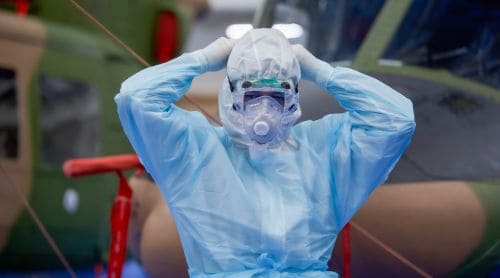
Your first priority is protecting yourself and your patients from infection. That starts with the right gear.
- Use proper PPE. Don N95 respirators, face shields, isolation gowns, and gloves. Confirm your fit tests, and never enter a patient’s room without fully donned protection.
- Triage and isolate. Separate symptomatic patients from the general population right away. Create dedicated pathways and use negative-pressure rooms when available.
- Double down on hand hygiene. Wash with soap and water (or use sanitizer) before and after every patient interaction, and after removing PPE.
- Communicate with calm. Your patients will be scared. Use simple, reassuring language to explain why you’re masked up and why they need to stay isolated. Your steady presence helps stabilize the room.
What does the medium-term response involve?
As the pandemic stretches on, your focus shifts to coordination and resource management. Shortages become a daily reality.
- Work with agencies. You’ll likely coordinate with FEMA and local emergency services on logistics, alternative care sites, and supply chains. Know your facility’s disaster response plan.
- Conserve PPE. When N95s, gowns, and gloves run low, follow evidence-based guidelines for extended use or limited reuse.
- Prioritize medications. Antipyretics, sedatives, and paralytics for ventilated patients may grow scarce. Allocate based on clinical necessity.
- Lean on supportive care. Ventilators will be in high demand, and vaccines often arrive too late to stop a fast-spreading virus. Supportive care keeps patients going while countermeasures catch up.
Don’t forget yourself in all of this. Take your breaks, even brief ones. Using “Mini Mental Day Breaks” can help reset your nervous system, plus regular check-ins with colleagues and mental health professionals.
Related CE course for nurses: Crisis Resource Management
How can nurses support long-term recovery?
A pandemic is a traumatic event, both for healthcare workers and the public. Long-term recovery calls for trauma-informed care and community leadership.
Approach your patients (and yourself) with empathy. Heightened anxiety, grief, and fear are normal responses to an abnormal situation. Create a safe environment, offer choices in care when you can, and help rebuild trust in the healthcare system.
You’ll also play a key role in vaccine education. Hesitancy is reported in more than 90% of countries, so be ready to address concerns directly. Use clear, jargon-free language, validate your patients’ fears rather than dismissing them, and give them factual information to make informed choices.
Related CE course for nurses: Stopping the Spread of Misleading Information
Want the full playbook?
This hypothetical pandemic is just one of five scenarios in A Nurse’s Guide to Navigating the Worst-Case Scenario. The complete eBook dives deeper into each phase and covers additional scenarios on medication errors, measles outbreaks, active shooter situations, and natural disasters.
You can’t predict when a crisis will hit, but you can prepare for it. Download the free guide from Elite Learning and build the confidence to protect your patients when it matters most.
Download the Worst-Case Scenario Guide
Frequently asked questions
What is the first thing a nurse should do in a pandemic?
Implement strict infection control immediately. That means donning full PPE (N95 respirator, face shield, isolation gown, and gloves), isolating symptomatic patients from the general population, and practicing rigorous hand hygiene before and after every patient interaction.
How do nurses handle PPE shortages during a pandemic?
When supplies run critically low, nurses follow evidence-based guidelines for the conservation, extended use, or limited reuse of N95 masks, gowns, and gloves. Coordinating with agencies like FEMA also helps manage supply chain disruptions.
How can nurses protect their mental health during a pandemic?
Prioritize self-care by taking allotted breaks, using short resets like “Mini Mental Day Breaks,” and setting healthy boundaries. Talking openly with peers and mental health professionals provides shared understanding, which is a powerful coping tool.
Where can I download A Nurse’s Guide to Navigating the Worst-Case Scenario?
The guide is available as a free download from Elite Learning. It covers five worst-case scenarios with short-term, medium-term, and long-term action steps for each.