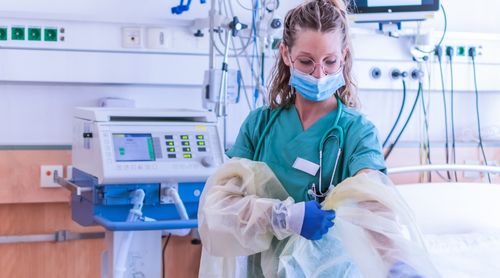
Quick answer: Med-surg nursing is one of the most common entry points into hospital-based nursing. Med-surg nurses care for adult patients recovering from surgery or managing acute medical conditions, using skills like patient assessment, prioritization, medication management, and interdisciplinary communication. It’s a high-demand specialty with clear pathways to career growth.

Medical-surgical nursing is one of the largest and most foundational specialties in hospital care. For newly licensed nurses, it’s often the first stop. For experienced nurses looking for a change, it’s a specialty that sharpens clinical thinking and opens doors to other areas of practice.
But what does a med-surg nurse actually do, and what does it take to succeed in this role? This guide breaks it all down, from the core responsibilities and skills to how structured training can set you up for a confident, successful transition.
Unlock your nursing career potential with CE membership options from Elite
What does a med-surg nurse do day to day?
Med-surg nurses care for adult patients who are recovering from surgery or being treated for acute medical conditions. These patients may be dealing with anything from post-op complications and infections to diabetes management or respiratory issues.
On any given shift, a med-surg nurse might:
- Conduct head-to-toe assessments on multiple patients
- Administer medications and monitor for adverse reactions
- Recognize early signs of patient deterioration and escalate appropriately
- Coordinate care with physicians, therapists, and social workers
- Communicate patient status during handoff using structured tools like SBAR
The scope is broad. That breadth is part of what makes med-surg nursing such a strong foundation for any nursing career.
Learn more about med-surg nursing
What med-surg nursing skills do you need to be effective?
Strong med-surg nursing skills go well beyond clinical knowledge. Yes, you need to understand pathophysiology, pharmacology, and wound care, but the skills that separate confident nurses from overwhelmed ones are often organizational and interpersonal.
The core competencies include:
- Systematic patient assessment: Knowing how to evaluate multiple patients by acuity and intervene in the right order
- Clinical prioritization and delegation: Deciding what needs your attention now and what can be safely assigned
- Early recognition of deterioration: Catching subtle changes before they become emergencies
- Medication management: Administering drugs safely and accurately within your scope of practice
- Interdisciplinary communication: Working clearly and professionally with the full care team
These skills take time to develop. That’s why nurses new to med-surg, whether they’re fresh out of school or transitioning from another specialty, often benefit from structured training that puts these competencies in context.
How does the Transitions in Practice: Med/Surg Nurse Training course prepare you for the unit?
Elite Learning’s Transitions in Practice: Med/Surg Nurse Training is a five-hour, self-paced online course built specifically for nurses entering or re-entering the med-surg setting. It’s designed to close the gap between what nursing school teaches and what the med-surg unit actually demands.
The course covers:
- Systematic frameworks for triaging and prioritizing patients by acuity
- Rapid response protocols for recognizing and escalating physiologic deterioration
- Delegation principles and safe medication administration within the RN scope of practice
- Evidence-based communication strategies, including SBAR and closed-loop communication for handoff and interdisciplinary collaboration
Learners work through case-based scenarios and reflective exercises that build both situational awareness and clinical confidence. The course is appropriate for newly licensed RNs stepping into med-surg for the first time and for experienced nurses transitioning from a different specialty or unit.
Where does this course fit within the Elite Passport membership?
The Transitions in Practice: Med/Surg Nurse Training course is part of the Elite Nursing Passport CE Membership. Alongside the med-surg transition course, the Passport membership also includes transition courses for ICU and Emergency nursing.
Passport members also get access to:
- 300+ CE courses from an ANCC-accredited provider
- Specialty certification exam prep for credentials including MEDSURG-BC and CMSRN, with 13+ hours of review content and 750 practice questions
- A nursing interview prep simulator, powered by Rubi™ Coach, with real-time feedback across eight nursing specialties including med-surg
- A nursing resume builder and career path planning tool
For nurses who are serious about making a specialty change, or simply want to build confidence before stepping onto a new unit, the Passport membership gives you everything in one place.
Frequently asked questions about med-surg nursing
What skills do med-surg nurses need?
Med-surg nurses need a combination of clinical and organizational skills. On the clinical side, that means patient assessment, medication administration, wound care, and recognizing signs of deterioration. On the practical side, prioritization, delegation, and clear communication with the care team are just as important. Nurses who thrive in med-surg tend to be strong critical thinkers who stay calm under pressure.
Is med-surg nursing a good starting specialty?
Med-surg is one of the most recommended starting specialties for new nurses. The variety of patient conditions builds a broad clinical knowledge base, and the fast pace sharpens time management and prioritization skills quickly. Many nurses who later transition to the ICU, emergency department, or other specialties say their med-surg experience gave them the foundation they needed.
What is the nurse-to-patient ratio on a med-surg unit?
Nurse-to-patient ratios on med-surg units vary by state and facility, but a common range is 1:4 to 1:6. Some states, like California, mandate specific ratios by law. Higher patient loads make prioritization and delegation skills especially important on med-surg units, which is why many nurses pursue targeted training before or during their transition to the specialty.
How is med-surg different from ICU nursing?
ICU nurses typically care for one to two critically ill patients who require intensive monitoring and complex interventions. Med-surg nurses manage larger patient loads with a wider variety of diagnoses, and patients are generally more stable. ICU nursing demands deep expertise in a narrower range of conditions, while med-surg demands breadth, adaptability, and strong organizational skills. Neither is easier than the other; they just require different strengths.
Ready to make your move to med-surg?
Transitioning to a new specialty is a real commitment, and it goes better with the right preparation. The Transitions in Practice: Med/Surg Nurse Training course gives you a structured, evidence-based foundation to walk onto the unit with confidence rather than guesswork.
Access this course and everything else included in the Elite Nursing Passport CE Membership to support your transition, earn CE credit, and take the next step in your nursing career.