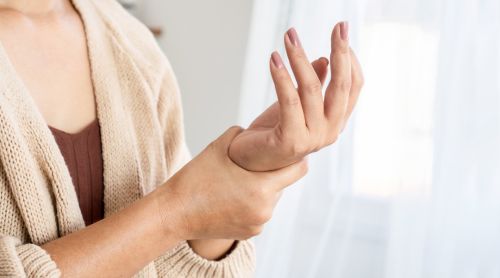
Quick answer: Carpal tunnel massage targets the median nerve pathway to reduce compression, ease pain, and improve hand function. Research-backed techniques including trigger point therapy, soft tissue mobilization, and neurodynamic techniques have shown significant improvements in grip strength, pain levels, and nerve conduction in carpal tunnel syndrome patients.

Carpal tunnel syndrome (CTS) is one of the most common conditions you’ll encounter as a massage therapist. It affects 1% to 5% of the adult population—with women three times more likely than men to develop it—and carries a financial burden of $4.8 billion annually in the U.S. (American Academy of Orthopaedic Surgeons, 2024). Patients miss an average of 28 workdays per year because of it (Gabrielli et al., 2020).
The good news? Research consistently shows that massage therapy and manual techniques can make a real difference. This post walks you through the anatomy, assessment tools, and hands-on techniques you need to treat CTS clients with confidence.
Related CE course for massage therapists: Carpal Tunnel Syndrome: A Comprehensive Guide for Manual Therapists
What is carpal tunnel syndrome, and why does it matter to massage therapists?
Carpal tunnel syndrome occurs when the median nerve becomes compressed within the carpal tunnel on the anterior wrist. The tunnel itself is a narrow passageway formed by the eight carpal bones and the flexor retinaculum. When surrounding tendons become inflamed, they swell and press on the median nerve.
The most common causes include:
- Repetitive strain: Typing, data entry, manual labor, and even recreational activities like golf place sustained stress on the wrist
- Wrist fractures: Bone displacement can narrow the tunnel and trigger inflammation
- Fluid retention: Pregnancy, cardiovascular disease, and certain medications can increase pressure within the tunnel
- Inflammatory arthritis: Rheumatoid arthritis, gout, and psoriatic arthritis all contribute to joint inflammation
- Neurological disease: Conditions like multiple sclerosis and diabetes mellitus can accelerate nerve degeneration
The most common age range for CTS is 40 to 60 years (Sevy et al., 2023), though younger clients with high-repetition jobs or hobbies are not immune. Knowing these risk factors helps you take a thorough intake history and set realistic treatment expectations.
What are the key signs and symptoms of carpal tunnel syndrome?
CTS presents with a recognizable cluster of signs. Here’s what to look for:
- Thenar muscle atrophy: The padded area at the base of the thumb flattens as the abductor pollicis brevis weakens. This is often an early indicator
- Paresthesia in the first 3.5 digits: Tingling and numbness in the thumb, index, middle, and radial half of the ring finger are hallmark symptoms
- Wrist and hand pain: Often described as sharp or shooting, and typically worsens with wrist flexion
- Grip and pinch weakness: Clients may struggle to hold objects, open jars, or perform fine motor tasks
- Sleep disruption: Nighttime paresthesia frequently wakes patients, compounding health challenges over time
One clinical note worth remembering: if hypothenar muscle atrophy is present (on the pinky side of the hand), consider Guyon’s canal syndrome—a compression of the ulnar nerve—rather than CTS.
How do you assess a client for carpal tunnel syndrome?
Several orthopedic tests help you build a clearer clinical picture. Use these in combination, not in isolation.
Phalen’s test
The client presses the dorsal surfaces of both hands together with wrists fully flexed. Hold for up to 60 seconds. Reproduction of CTS symptoms within 5 seconds indicates a positive result. Wrist flexion pointing positive suggests a bone or joint displacement issue; wrist extension pointing positive suggests a myofascial component.
Tinel’s sign
Lightly tap the carpal tunnel on the palmar side of the wrist. Recreation of tingling or numbness in the median nerve distribution is a positive sign.
Finger loop test
The client interlocks the index finger and thumb in opposing loops and resists your attempt to pull them apart. Inability to maintain the lock suggests CTS.
Allen’s test
Compress both the radial and ulnar arteries, have the client make a fist several times, then release one artery at a time. Poor blood flow restoration indicates myofascial restrictions along the respective side of the forearm.
Finkelstein test
The client places the thumb inside a fist, then ulnar deviates the wrist. Sharp radiating pain indicates De Quervain’s tenosynovitis—a condition that mimics CTS and requires a different treatment approach.
CTS can mimic many conditions, including thoracic outlet syndrome, cervical radiculopathy, and Guyon’s canal syndrome. Keep your differential diagnosis skills sharp.
What does research say about carpal tunnel massage?
The evidence base for manual therapy in CTS treatment is growing. Here’s a summary of what the research tells us:
- Elliott & Burkett (2013) found that 30-minute massage sessions twice weekly for six weeks produced significant symptom improvement from week two onward when combining massage with trigger point therapy (p < 0.001)
- Madenci et al. (2012) compared a specialized hand massage technique combined with splinting versus splinting alone in 84 patients. The massage group showed significantly better outcomes for pain and grip strength (p < 0.05)
- Moraska et al. (2008) showed that targeted CTS massage produced a 17.3% increase in grip strength compared to 4.8% for general massage
- Jiménez-Del-Barrio et al. (2022) conducted a systematic review of six randomized controlled trials involving 401 patients, finding significant improvements in pain intensity, symptom severity, functional status, and nerve conduction velocity following manual therapy
Based on this body of research, the most supported techniques include:
- Swedish (classic) massage
- Trigger point therapy
- Soft tissue mobilization
- Neurodynamic techniques
- Targeted carpal tunnel massage protocols
- Ultrasound therapy combined with massage
How do you perform carpal tunnel massage? A step-by-step approach
Effective CTS treatment follows the pathway of the median nerve from the upper arm to the hand. Work proximal to distal.
Step 1: Free the elbow
Begin with effleurage, petrissage, and friction to warm up the brachium. With the arm held at 90 degrees from the torso, use a cupped hand to grasp the biceps brachii and mobilize it toward the pinky side. Then use straight fingers to apply slow, deep pressure into the brachialis along the distal humerus. Use longitudinal strokes for length and cross-fiber strokes to address adhesions.
Step 2: Address the medial epicondyle
Use the distal interphalangeal joints to create scooping motions away from the medial epicondyle, both proximal (toward the triceps) and distal (toward the flexor tendons). Follow with thumb friction to clear restrictions in the same area.
Step 3: Free the flexors
With the client’s forearm palm-up, apply alternating compression—first radial, then ulnar—to create space in the interosseous membrane. Follow with forearm and elbow gliding strokes along the extensor surface from the lateral epicondyle distally to where the tendons begin.
Locate and soften the brachioradialis using a pincer grip, then work deeper to the pronator teres by gliding diagonally from the radial tuberosity toward the medial epicondyle.
Step 4: Address trigger points
Strip through the anterior and posterior antebrachial muscles with thumbs, knuckles, or fingertips. Pause at twitch responses or areas of radiating pain. Adding pronation and supination of the forearm intensifies the effect.
Step 5: Work the hand
Spread the client’s palm and use your thumbs to address the thenar and hypothenar muscles. Trigger points here can be as small as a grain of sand. Close your eyes and rely on tactile feedback to detect changes in texture and tone. Combine with gentle hand stretching.
What self-care advice should you give your CTS clients?
Client education between sessions is an essential part of your role. Share these practical recommendations:
- Stretch daily: At least 10 minutes per day, especially before and after repetitive tasks
- Take frequent breaks: A 10-minute rest per 50 minutes of work is a general guideline; more frequent breaks for severe cases
- Use wrist splints: Particularly during sleep, when wrist malalignment is a common trigger for nighttime symptoms
- Try self-massage: Moderate pressure into the thenar and hypothenar muscles can relieve compression between sessions
- Elevate when there’s swelling: Especially relevant for pregnant clients or those with fluid retention
- Stay warm: Cold causes tissue constriction, which increases median nerve compression
- Relax the grip: Encourage clients to notice unconscious tension while driving, typing, or holding objects
- Try topical analgesics: Counterirritants (menthol, camphor), salicylates, and capsaicin can provide temporary relief
Ergonomic adjustments also matter. Suggest repositioning desk items weekly to vary movement patterns, using a standing desk setup, and adjusting keyboard height to maintain a neutral wrist position.
Frequently asked questions about carpal tunnel massage
Can massage therapy treat carpal tunnel syndrome on its own?
Massage therapy is an effective part of a conservative treatment plan, but rarely works best in isolation. Research supports combining massage with nerve gliding exercises, wrist splinting, ergonomic adjustments, and in some cases, medical management. Approximately 70% to 90% of mild to moderate CTS cases respond well to conservative approaches.
How many massage sessions does a CTS client typically need?
Several studies used twice-weekly sessions over six weeks as their treatment model and saw meaningful results. That said, session frequency should be tailored to symptom severity, client availability, and progress. Reassess regularly and adjust accordingly.
Which massage techniques are most effective for CTS?
According to current research, targeted CTS massage outperforms general massage. Trigger point therapy, soft tissue mobilization, and neurodynamic techniques each show strong evidence for reducing pain and improving grip strength and nerve conduction (Jiménez-Del-Barrio et al., 2022; Moraska et al., 2008).
When should a massage therapist refer a CTS client to another provider?
Refer when symptoms are worsening despite consistent conservative care, when thenar atrophy is progressing rapidly, or when the client reports persistent numbness and significant weakness. Surgical evaluation is typically recommended when conservative treatment fails after six months. You’re a valuable part of a collaborative care team.
Can CTS clients make their symptoms worse between sessions?
Yes. Poor ergonomics, excessive wrist flexion or extension, vibrating tools, and cold environments can all aggravate symptoms. This is why patient education is just as important as hands-on treatment.
Build your skills and expand your practice
Carpal tunnel syndrome is a condition you’ll encounter again and again throughout your career. The more deeply you understand it, the more effective—and confident—you’ll be in the treatment room.
Elite Learning’s course, Carpal Tunnel Syndrome: A Comprehensive Guide for Manual Therapists, developed by Jimmy Gialelis, LMT, BCTMB, covers the anatomy, differential diagnosis, assessment techniques, and hands-on protocols covered in this post in much greater depth. It’s a practical, evidence-based resource built specifically for massage therapists who want to deliver better outcomes for their CTS clients.
Explore this course and hundreds more through the Elite Massage Therapy Passport Membership—your all-in-one CE solution, starting at $149/year.