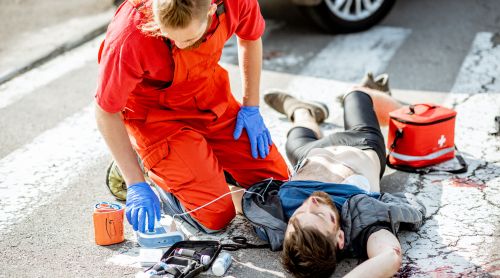
Quick summary: Athletic emergencies—including sudden cardiac arrest, exertional heat stroke, and anaphylaxis—can occur without warning during practice or competition. Sports physical therapists who understand how to build and execute an emergency action plan (EAP) are better positioned to protect athletes, coordinate care, and improve outcomes when it matters most.

A basketball player collapses mid-warmup. A football player overheats during a September practice. A sprinter hits the ground after a conditioning drill. These aren’t hypothetical scenarios; they’re real athletic emergencies that happen across the country every season.
For sports physical therapists, being prepared for these situations goes beyond knowing the clinical response. It means understanding the systems, the plans, and the personnel that support effective emergency management. This post breaks down the key components of athletic emergency preparedness so you can show up confident and capable when athletes need you most.
Related CE course for physical therapists: Emergency Management in Athletics
Why athletic emergencies demand a proactive approach
More than 54 million young athletes participate in youth and high school sports in the United States. Approximately 300 sports-related deaths occurred in America between 2008 and 2015, and 90% of student athletes report some form of sports-related injury during their careers.
Many of these injuries are predictable and preventable. That’s the key insight. Risk management myths—”it can’t happen to me,” or “no serious injuries means no problem”—create dangerous blind spots. As a sports PT, you’re uniquely positioned to challenge those assumptions and advocate for the safety infrastructure athletes deserve.
The top causes of sudden death in sport include cardiac events, head injuries, exertional sickling, asthma, anaphylaxis, direct trauma, and weather-related incidents. Each of these requires a specific, rehearsed response.
What goes into an effective emergency action plan (EAP)?
An EAP is a written, venue-specific document that outlines how your team will respond to medical emergencies during athletic events. It’s not a one-size-fits-all document. It needs to reflect the unique layout, personnel, and resources of each facility.
Core components every EAP should include
- Key personnel and roles: Athletic trainers, coaches, administrators, EMS, security, custodial staff, and willing parents all have defined roles
- Communication systems: Two-way radios, cell phone reception checks for remote fields, and backup communication methods
- Equipment inventory: Location of AEDs, first aid kits, and other emergency equipment per venue
- Transportation protocols: Clear decisions about when to transport immediately (e.g., sudden cardiac arrest) vs. stabilize on-site (e.g., heat illness)
- Incident reporting forms: Including name, date of birth, description of injury, witnesses, treatment given, and transport records
- Annual review and rehearsal: EAPs should be reviewed with EMS, school administrators, medical staff, and coaching personnel every year
Best practice recommendations from the National Athletic Trainers’ Association (NATA) state that every school should develop an EAP for each of its venues, and all staff members should have a written copy.
The Medical Timeout: a pre-event best practice
Before every event, the NATA recommends a “Medical Timeout,” or a brief pre-event meeting where the athletic healthcare team reviews the venue’s EAP. This meeting covers provider roles and locations, communication methods, ambulance access routes, designated hospital, and equipment status. It also identifies any situational factors that could affect the plan, like construction, crowd flow, or weather conditions.
This small habit can make a significant difference in response coordination when an emergency occurs.
Recognizing and responding to common athletic emergencies
Sudden cardiac arrest (SCA)
SCA is one of the most time-critical emergencies in sports. Males have a higher incidence than females, and high-risk sports include basketball, swimming, lacrosse, football, and cross country.
The key chain of survival: early recognition + early CPR + early AED = improved survival.
Survival rate decreases by 10% for every minute an AED is not used. Sports PTs should know the location of every AED in their venues and ensure all staff are CPR/AED trained.
Suspect SCA in any athlete who is collapsed and unresponsive, especially following a non-traumatic collapse. Note: A brief seizure after collapse is common with SCA. Treat any unresponsive, seizing athlete as a cardiac event until proven otherwise.
Exertional heat stroke (EHS)
EHS is 100% preventable if treated properly, and fatal if it isn’t. The hallmark sign is a core body temperature above 105°F, accompanied by CNS dysfunction such as confusion, aggression, or loss of consciousness.
Treatment is aggressive and immediate: cold water immersion within minutes is the gold standard. If immersion isn’t available, use alternate cooling methods and activate EMS for transport right away.
Prevention strategies include:
- Monitoring wet bulb globe temperature (WBGT) readings
- Following a 14-day heat acclimatization protocol before full-intensity practice
- Scheduling frequent fluid breaks and adjusting intensity based on temperature and humidity
- Educating athletes on pre-hydration and rehydration strategies
Exertional sickling
Athletes with sickle cell trait (SCT) do not need to be disqualified from sport, but they do require special considerations. During intense or extensive exercise, hemoglobin can sickle, reducing oxygen-carrying capacity and potentially leading to a life-threatening crisis, sometimes within 2 to 3 minutes of maximal exertion.
SCT is most common among people whose ancestors come from Africa, the Middle East, the Mediterranean, Caribbean, and India. Approximately 8–9% of African Americans have SCT. Knowing your athletes’ medical history through preparticipation exams is essential.
Anaphylaxis
Athletes with known allergies and an epinephrine prescription should have an anaphylaxis and allergy emergency plan in place. Epinephrine takes effect within seconds but lasts only 10–20 minutes. A second dose may be needed after five minutes if the initial response is inadequate.
Always call EMS, maintain an open airway, and initiate early transport, even after administering an EpiPen.
Concussions
Remove any athlete from play immediately if a concussion is suspected. Don’t permit return to activity until a healthcare provider provides written clearance. Return-to-play requires the athlete to be symptom-free at rest and with cognitive exertion, show normal neurocognitive and balance test scores at baseline, and complete a stepwise exertional progression protocol.
Related CE course for physical therapists: Management of Sports-Related Concussions: Staying Ahead of the Game, 2nd Edition
Building your role on the athletic healthcare team
Sports physical therapists bring unique clinical expertise to athletic healthcare teams. The presence of credentialed sports medicine professionals, including athletic trainers and PTs, has been associated with lower injury rates, improved concussion diagnosis, and better return-to-play decisions.
Your role includes more than acute response. You can advocate for EAP development, lead annual reviews, educate coaches on heat illness prevention, and ensure athletes complete preparticipation exams that flag underlying conditions before they become emergencies.
Take the next step in your sports PT practice
Managing athletic emergencies well isn’t about reacting faster. It’s about preparing smarter. Building and rehearsing a solid EAP, knowing your venue, training your team, and staying current on best practices all reduce risk and improve outcomes.
If you’re looking to deepen your knowledge in sports physical therapy and emergency preparedness, structured continuing education courses can help you develop evidence-based protocols and bring new value to your athletic healthcare team. The athletes you work with are counting on it.
Frequently asked questions about managing athletic emergencies
What is an emergency action plan (EAP) in sports?
An EAP is a written, venue-specific document that outlines how healthcare personnel and support staff should respond to medical emergencies during athletic events. It identifies key personnel, communication methods, equipment locations, transportation protocols, and post-incident reporting procedures.
How often should an EAP be reviewed?
According to NATA best practice recommendations, EAPs should be reviewed and rehearsed annually with all parties involved, including EMS, school administrators, medical staff, and coaching personnel.
What are the most common causes of sudden death in sports?
The most common causes include cardiac events, head injuries, exertional sickling, asthma, anaphylaxis, direct trauma, and weather-related incidents such as lightning and heat stroke.
How should exertional heat stroke be treated on the field?
Immediate, aggressive whole-body cooling is the priority. Cold water immersion is the most effective treatment. EMS should be contacted for transport, and if immersion isn’t possible, alternate cooling methods should be used while arranging immediate medical transport.
Can athletes with sickle cell trait participate in sports?
Yes. Sickle cell trait does not disqualify athletes from participation. However, athletes with SCT need individualized monitoring, modified activity during periods of intense exertion, and a clearly documented plan within the EAP.
What is the Medical Timeout, and why does it matter?
The Medical Timeout is a pre-event meeting recommended by the NATA where the athletic healthcare team reviews the venue’s EAP before competition begins. It ensures all providers know their roles, communication methods, equipment locations, and any situational factors that could affect emergency response.