From Hippocrates to HIPAA, the breadth of medical history is full of fascinating cases that challenged everything doctors thought they knew. These unusual patients pushed the boundaries of medical understanding and revealed new insights about the human body. Let’s explore four remarkable cases from medical history that continue to intrigue medical professionals today.
The man with a hole in his head
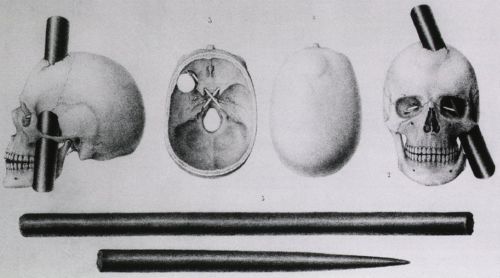
One of the most famous cases in neuroscience is that of Phineas Gage. In 1848, Gage was a 25-year-old railroad foreman in Vermont, a job that involved clearing rock to make way for the tracks. This required using a tamping iron—a three-foot-long, sharpened iron rod—to pack explosive powder into holes.
A freak accident
One day, the powder detonated prematurely. The explosion sent the tamping iron shooting through Gage’s head. It entered below his left cheekbone and exited through the top of his skull, landing several feet away. Miraculously, Gage survived. He was conscious and able to speak within minutes of the accident. He even walked to the cart that took him to a doctor.
Related CE course for nurses: Trauma Informed Care: Healing through Understanding
A changed personality
Gage’s physical recovery was remarkable. However, the accident had drastically altered his personality. Before the incident, friends and acquaintances knew him as a responsible and well-liked man. Afterward, he became impulsive, profane, and unreliable. His friends said he was “no longer Gage.”
His case provided the first major evidence linking specific brain regions, particularly the frontal lobes, to personality and social behavior. Gage’s skull and the tamping iron that failed to kill him are now on display at Harvard University’s Warren Anatomical Museum, a testament to this landmark case.
An outbreak of sleeping sickness
Between 1916 and 1930, a mysterious illness swept across the world. Encephalitis lethargica, also known as “sleeping sickness,” affected over one million people. Patients fell into deep, prolonged sleep states that could last weeks or months.
Dr. Constantin von Economo first described the condition in Vienna in 1917. He observed patients who appeared to be in a waking coma, conscious but unable to move or respond normally. Many victims remained in this state for years or even decades.
Symptoms and progression
The disease typically began with flu-like symptoms. Patients then developed severe lethargy and movement disorders. Some became completely immobile, while others developed involuntary muscle spasms and tics.
Neurologist and writer Oliver Sacks documented many of these cases in his famous book Awakenings. He described patients who suddenly “awakened,” albeit temporarily, decades later when treated with L-DOPA medication in the 1960s. Their stories, presented in clinical detail, revealed the devastating long-term effects of this mysterious illness.
Related CE course for nurses: Emerging Infectious Diseases: Strategies for Detecting and Preventing
Medical breakthroughs
Research into encephalitis lethargica advanced our understanding of brain function, including how inflammation affects different regions of the brain. This knowledge proved essential for treating modern encephalitis cases.
The epidemic also highlighted the importance of viral research in medicine. Many experts believe a virus caused the outbreak, though the exact pathogen was never identified. This epidemic highlighted the need for better infectious disease surveillance and response systems.
The curious case of Gloria Ramirez
In 1994, Gloria Ramirez was brought to the emergency room of a hospital in Riverside, California, ostensibly suffering from the effects of advanced cervical cancer. What happened next turned into a medical puzzle that remains partially unsolved to this day.
The “Toxic Lady”
As nurses treated Ramirez, they noticed an oily sheen on her skin and a fruity, garlic-like odor from her mouth. A nurse drawing her blood noted the sample smelled like ammonia. Soon after, the medical staff attending her began to feel ill. Many experienced dizziness, fainting, and shortness of breath. In total, 23 of the 37 emergency room staff members experienced at least one symptom. The situation became so severe that the hospital declared an internal emergency and evacuated the ER. Sadly, Gloria Ramirez passed away that evening.
Unraveling the mystery
The incident sparked a massive investigation. One prominent theory suggests that Ramirez may have been using dimethyl sulfoxide (DMSO), a degreaser, as a topical home remedy for pain. The theory proposes that a series of chemical reactions, triggered by the oxygen administered in the ER, converted the DMSO into dimethyl sulfate, a highly toxic chemical. While this is the most widely accepted explanation, it has never been definitively proven, and the case of the “Toxic Lady” continues to be a chilling example of unexplained medical phenomena.
The girl who couldn’t feel pain
Ashlyn Blocker was born in 1996 with an extremely rare genetic condition called congenital insensitivity to pain with anhidrosis (CIPA), a condition that affects fewer than 100 people worldwide. Though most patients with this condition can still feel pressure, texture, and some temperature, CIPA prevents the nervous system from sending pain signals to the brain. Patients also cannot sweat properly, making internal temperature regulation difficult.
Ashlyn’s parents first noticed something unusual when baby Ashlyn would bite her tongue and lips without crying. For Ashlyn, living without pain signals meant that she could break bones, burn herself, or suffer serious injuries without feeling any discomfort.
Impact on medical understanding
Numerous researchers have studied Ashlyn’s case extensively. Their studies revealed mutations in the SCN9A gene, which controls sodium channels in nerve cells. These channels are essential for transmitting pain signals throughout the body, alerting the brain to possible damage. With this warning switch turned off, patients with CIPA face constant risk of serious injury or death.
Ashlyn’s case contributed to breakthrough research in pain management. Scientists now better understand how pain pathways work in the nervous system, which has helped develop new treatments for chronic pain conditions that affect millions of people worldwide.

Learning from medical mysteries
From advanced imaging to genetic testing, modern technology allows doctors to investigate conditions which had once been shrouded in mystery. To shed light on cases that were once considered unsolvable, however, the human element remains crucial. Solving what was once unsolvable requires not only curiosity, but also deep compassion.
The legacy of these mysterious, bizarre, and spine-chilling cases continues to influence modern medicine, inspiring fresh research and treatment approaches that benefit countless patients worldwide.