Saliva is far more than a lubricant. It’s a dynamic biological fluid essential for oral and systemic health. Produced primarily by three major salivary glands—the parotid, submandibular, and sublingual glands—and numerous minor glands scattered throughout the oral mucosa, saliva plays vital roles in maintaining tissue integrity. It supports digestion, immunity, and microbial balance, and plays a key role in managing dry mouth.
Related CE for dental professionals: Managing Dry Mouth: The Role of Saliva
Composition of saliva
Saliva is approximately 99% water, with the remaining 1% composed of electrolytes, enzymes, proteins, and antimicrobial agents. Despite that small percentage, these components are critical:
- Electrolytes (sodium, potassium, calcium, phosphate, bicarbonate) maintain pH balance and support remineralization.
- Proteins (mucins, amylase, lysozyme, lactoferrin, immunoglobulin A) provide lubrication and antimicrobial defense.
- Enzymes (amylase, lipase) aid in the breakdown of starches and fats.
- Growth factors and cytokines help repair oral tissues and maintain mucosal health.
Together, these constituents make saliva the first line of defense for oral homeostasis.
What saliva does in the mouth
Saliva contributes to oral health through several key functions:
- Lubrication: Coats oral tissues to facilitate speech, swallowing, and mastication.
- Buffering: Neutralizes acids from food and bacterial metabolism, protecting enamel.
- Antimicrobial action: Controls the oral microbiome, preventing overgrowth of harmful bacteria and fungi.
- Remineralization: Provides calcium and phosphate ions to repair early enamel demineralization.
- Taste and digestion: Dissolves food molecules and contains enzymes that initiate digestion.
Without adequate saliva, even simple tasks like swallowing or speaking become uncomfortable. At the same time, the risk for dental decay, erosion, and infection increases significantly.
What is dry mouth and what causes it?
Dry mouth, or xerostomia, refers to the subjective feeling of oral dryness, often resulting from hyposalivation, the measurable reduction in salivary flow. It affects approximately 20% of adults in the United States, with prevalence climbing to nearly 30–40% among those over 65 years old, primarily due to medication use and systemic disease.
Common causes of dry mouth
- Medications: Over 500 drugs, including antidepressants, antihypertensives, antihistamines, and opioids, list dry mouth as a side effect.
- Radiation therapy: Especially to the head and neck, which can permanently damage salivary glands.
- Systemic diseases: Diabetes, Sjögren’s syndrome, and autoimmune disorders significantly reduce secretion.
- Lifestyle factors: Dehydration, tobacco use, alcohol, and caffeine intake exacerbate symptoms.
Even mild decreases in salivary output can lead to rapid deterioration in oral health if left unaddressed.
Recognizing dry mouth and its symptoms
Dental professionals are often the first to notice the signs of dry mouth. Patients may report:
- Difficulty swallowing, chewing, or speaking
- Persistent thirst, particularly at night
- Altered taste perception (dysgeusia)
- Burning or tingling sensations in the mouth
- Frequent use of water or lozenges to ease dryness
Clinically, the dental team might observe:
- A dry, pale, or sticky oral mucosa
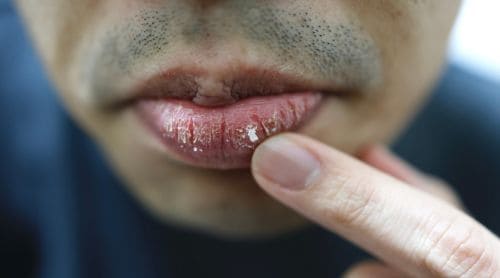
- Cracked lips or angular cheilitis
- Stringy or absence of saliva pooling under the tongue
- Increased plaque and calculus formation
- Rampant cervical or root caries
- Denture discomfort or reduced retention
Early identification of these signs can help prevent irreversible damage to the oral structures.
How to diagnose dry mouth
Diagnosis involves a mix of clinical evaluation, symptom reporting, and objective salivary flow measurement.
- History and questionnaires: Ask about dry mouth severity, medication use, and daily hydration habits.
- Sialometry: Measure unstimulated whole saliva (UWS) and stimulated saliva (SWS). UWS <0.1 mL/min suggests hyposalivation. SWS <0.7 mL/min indicates reduced stimulated output.
- Sialochemistry: Assess pH, buffering capacity, and viscosity when needed.
- Imaging: In complex or chronic cases, sialography or salivary scintigraphy can evaluate gland structure and function.
A thorough record of findings supports better interdisciplinary coordination with medical providers.
Risk implications for the dental plan
Dry mouth is not merely a comfort issue. It profoundly impacts oral health and treatment outcomes.
- Caries and erosion: With saliva’s buffering and re-mineralizing capacity diminished, patients experience rapid root and cervical caries.
- Soft tissue pathology: Reduced lubrication increases the risk of mucositis, ulceration, and candidiasis.
- Periodontal implications: Biofilm accumulation and altered flora predispose to periodontal inflammation.
- Prosthodontic challenges: Reduced salivary film affects denture stability and mucosal comfort.
Consequently, these patients require customized preventive and restorative protocols, shorter recall intervals, and frequent fluoride applications.
Stepwise management in dental practice
1. Identify and address contributing factors
- Review the patient’s medical and medication history for xerogenic drugs.
- Consult with physicians to modify, substitute, or reduce dosages where possible.
- Advise on hydration and avoidance of alcohol, caffeine, and tobacco.
2. Stimulate and substitute saliva
- Encourage frequent sips of water and xylitol-containing gum or lozenges to enhance flow.
- Prescribe sialogogues such as pilocarpine (Salagen) or cevimeline (Evoxac) when appropriate.
- Recommend artificial saliva substitutes like carboxymethylcellulose-based gels, sprays, or rinses.
3. Protect teeth and tissues
- Prescribe 5,000 ppm fluoride toothpaste or custom fluoride trays.
- Apply fluoride varnish every 3–4 months.
- Manage mucosal irritation with mild topical anesthetics or lubricating gels.
- Monitor for Candida infections and treat with topical antifungals when necessary.
A chairside protocol the whole team can use
- Screen every visit. Ask, “Do you often feel your mouth is dry?”
- Inspect and measure. Check salivary pooling and perform flow rate testing if needed.
- Update risk profile. Adjust preventive plans for caries, erosion, or periodontal risk.
- Customize care. Implement fluoride therapy, salivary substitutes, and recall every 3–4 months.
- Coordinate care. Communicate findings with the patient’s physician when drug-induced xerostomia is suspected.
- Document. Record flow rates, observations, and prescribed management for continuity of care.
This structured approach ensures consistency and accountability across all providers in the dental team.
Patient education that sticks
Effective communication transforms compliance. Dental professionals should emphasize why saliva matters and how patients can protect it daily.
- Explain that saliva is the body’s natural defense against decay and infection.
- Provide written or digital instructions for fluoride and saliva-stimulating routines.
- Demonstrate product use—fluoride gels, mouth moisturizers, or xylitol lozenges.
- Reinforce hydration habits and sugar-free diet choices.
- Offer follow-up texts or portal reminders for patients starting new salivary care plans.
When patients understand the connection between saliva and oral health, adherence improves dramatically.
When to refer
Referral to medical specialists is warranted when:
- Dry mouth persists despite standard interventions.
- Autoimmune disease (e.g., Sjögren’s syndrome) is suspected.
- The patient has undergone head and neck radiation.
- There are recurrent fungal infections or unexplained mucosal lesions.
Collaboration with rheumatologists, oncologists, and ENT specialists ensures comprehensive care and long-term quality of life.
What success looks like
Effective management doesn’t mean curing xerostomia; it simply means controlling its impact. Success indicators include:
- Improved comfort and reduced oral burning or pain.
- Fewer new carious lesions or mucosal infections.
- Better denture tolerance and oral function.
- Measurable increases in salivary flow and pH stability.
Regular reassessment and patient feedback closes the loop between prevention, treatment, and ongoing care.