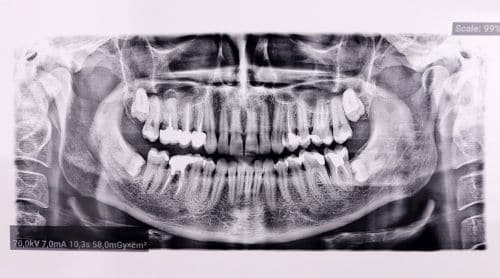
Dental radiographic examinations are fundamental to the daily practice of dentistry. They allow you to diagnose decay, evaluate bone loss, and uncover pathologies that a visual exam simply cannot detect. But while x-rays are incredibly useful, they also bring an inherent risk to both your patients and your staff.
Ionizing radiation is a known carcinogen, and its effects on the human body are cumulative. Because you handle this equipment every day, making dental radiation safety a top priority is essential. Taking the right precautions protects your patients while ensuring your team stays healthy over the course of their careers.

This guide explores the mechanisms of radiation injury, the sources of daily exposure, and the best practices you can implement to keep everyone safe. By reviewing these proven strategies, you can confidently operate your imaging equipment, answer patient questions, and provide top-tier care without unnecessary risk.
Related CE course for dental professionals: Dental Radiation Health, Safety, and Protection, 3rd Edition
The biological effects of radiation exposure
To understand dental radiation safety, you must first understand what happens when x-ray photons interact with human tissue. When an x-ray photon dislodges an orbital electron from an atom, it creates an ion pair. This ionization process alters the chemical binding properties of the atom. If that atom is part of a critical molecule like DNA, the alteration can cause severe cell impairment.
Radiation injury occurs through direct and indirect effects. The direct effect happens when biologic macromolecules absorb x-ray energy and form highly reactive free radicals. These free radicals can break apart or cross-link, altering their structure. The indirect effect occurs when water molecules are ionized. Because water makes up about 60% of a person’s body weight, this is the primary pathway for radiation injury. Free radicals from ionized water can combine to form toxic substances like hydrogen peroxide, causing widespread cellular alterations.
The effects of radiation are categorized as either deterministic or stochastic. Deterministic effects occur after a certain threshold of high-dose radiation is reached, resulting in immediate tissue damage like erythema. In oral diagnostic imaging, you never reach this threshold. Stochastic effects are much more relevant to dentistry. These responses, such as cancer or genetic changes, increase in probability as the radiation dose increases. Because no radiation dose is completely safe from stochastic effects, you must keep patient exposure to an absolute minimum.
Measuring radiation and assessing risk
When discussing radiation safety, you need a clear understanding of how radiation is measured. The terminology varies depending on whether you are measuring the radiation at the source, the amount absorbed by the patient, or the estimated risk of health effects.
Exposure refers to the amount of radiation emitted from the tubehead that reaches the patient’s skin. The international unit for exposure is coulombs per kilogram. The absorbed dose measures the actual radiation energy absorbed by the patient’s tissues, typically expressed in grays.
To compare the biologic effects of different types of radiation, scientists use the equivalent dose, measured in sieverts. Finally, the effective dose is used to estimate radiation risk. It takes into account the type of radiation and the varying radiosensitivity of the exposed tissues. Understanding these measurements helps you put the risks of dental imaging into proper perspective, especially when explaining them to your patients.

Everyday sources of radiation exposure
It often surprises patients to learn that humans are constantly exposed to radiation. In the United States, about half of our annual radiation exposure comes from natural background sources. This includes cosmic radiation from outer space and terrestrial radiation from radioactive materials in the earth and air. Radon gas is the single largest contributor to this natural exposure.
The other half comes from artificial or human-made sources. Medical diagnostic imaging is the largest contributor to artificial radiation. While computed tomography and nuclear medicine make up a large portion of this, dental imaging contributes roughly 2.5% of medical radiation exposure. Small amounts also come from consumer products, industrial sources, and occupational exposure. Recognizing that natural background radiation accounts for a significant portion of our daily dose helps you reassure patients that the relative exposure from dental x-rays is quite low.
Protecting yourself as a dental radiographer
As a dental professional, you must take active steps to protect yourself from occupational radiation exposure. Excess exposure can result from the primary beam, secondary scatter radiation, and leakage from the tubehead.
To avoid these risks, always stand behind a protective barrier during radiographic exposures. Wall materials like drywall and sheetrock usually provide adequate shielding for dental operatories. If a barrier is not available, stand at least 6 feet away from the patient and at a 90-to-135-degree angle to the primary beam.
Never hold the tubehead in place during an exposure. If a suspension arm drifts, have it professionally repaired immediately. You should also never hold an intraoral receptor in the patient’s mouth or hold the patient in place. If a child or special needs patient requires assistance, provide a lead apron to their parent or guardian and instruct them on how to stabilize the receptor.
Many clinics also use occupational radiation monitoring devices. Wearing an optically stimulated luminescence dosimeter tracks your occupational exposure over time, ensuring you comply with all radiation safety practices.
Strategies to limit patient exposure
Patient protection is rooted in the ALARA principle: keep radiation exposure “as low as reasonably achievable.” Every effort must be made to avoid unnecessary radiation.
The first step is properly prescribing radiographs. You should only take x-rays when there is a high probability that the images will provide information that affects the patient’s treatment. Instead of taking routine annual films, determine the frequency based on the patient’s clinical examination, health history, and caries risk.
When you do take images, equipment choices make a massive difference. Using a rectangular collimator instead of a circular one decreases the area of exposure by 60%. Switching to F-speed film or digital sensors reduces patient exposure significantly compared to older D-speed films.
You must also use patient shields. Lead aprons and thyroid collars protect sensitive reproductive and thyroid tissues from scatter radiation. Finally, perfect your imaging techniques. Retakes are a leading cause of unnecessary patient exposure. Using beam alignment devices and practicing precise receptor placement helps you capture a diagnostic image on the first try.
Addressing patient concerns with confidence
Patients frequently express concerns about radiation safety, and they usually direct their questions to dental hygienists and assistants. Encouraging these questions gives you a great opportunity to educate your patients and build trust.
If a patient asks if x-rays are truly necessary, explain that radiographs allow you to see decay, bone loss, and infections that a visual exam cannot detect. Early detection prevents further damage and reduces treatment costs.
When patients worry about cancer risks, provide tangible comparisons. Let them know that a set of four bitewing radiographs taken with digital sensors and rectangular collimation provides the same amount of radiation as about 0.6 days of normal background radiation. Reassure them that the diagnostic benefits of treating hidden oral disease far outweigh the minuscule radiation risk. By communicating clearly and empathetically, you help them feel comfortable and secure in your chair.
Related CE course for dental professionals: Effective Communication in Healthcare
Keep learning and stay protected
Mastering dental radiation safety empowers you to provide exceptional care while keeping your workplace secure. By applying the ALARA principle, updating your equipment, and using flawless technique, you drastically reduce radiation risks for everyone involved.
Take the time to review your clinic’s safety protocols and ensure your equipment is regularly inspected. When you stay informed and proactive, you can confidently tackle any challenges that come your way and build a thriving, safe practice.