Executive summary: Prenatal massage provides essential physical and emotional relief for pregnant clients by utilizing modified techniques and positions, such as side-lying and semi-reclining. Massage therapists must understand trimester-specific physiological changes and recognize contraindications, like preeclampsia or severe bleeding, to ensure safe and effective treatment.

Many therapists feel hesitant when a pregnant client books a session. You want to provide relief, but you also want to keep both the mother and baby safe. Working with prenatal massage clients requires specific knowledge about body changes, safe positioning, and appropriate techniques.
Mastering prenatal massage opens up a rewarding avenue for your massage therapy practice. You have the unique opportunity to support women through immense physical and emotional transitions. This guide provides everything you need to know about prenatal massage. You’ll learn how to adapt your skills for each trimester, identify critical contraindications, and choose the most comfortable positions for your clients.
Related CE course for massage therapists: Working with Prenatal Massage Clients
What happens to the body during the first trimester?
The first trimester involves significant hormonal adjustments. Many women feel incredibly tired, nauseous, and sensitive to smells. Cardiac output and renal plasma increase, and clients might feel faint due to a drop in diastolic blood pressure.
During this stage, the pelvis begins to soften because of the hormones relaxin and progesterone. Since the risk of miscarriage is highest during the first trimester, vigorous work may be inappropriate. Instead, focus on breathing and visualization to help the client relax. Avoid using strong strokes around the pelvis and abdominal areas.
What happens to the body during the second trimester?
By the second trimester, the uterus moves up into the abdominal cavity. Fetal movements become noticeable around 16 to 20 weeks. Morning sickness typically settles between weeks 12 and 16, and the pregnancy is generally considered stable from weeks 16 to 18.
However, clients may experience sharp pains due to the stretching of broad uterine ligaments. During this time, you can encourage postural awareness. The key areas of focus are the back and abdomen. You can apply stronger physical work on the sacrum and pelvic area, but take caution not to pull already-extended abdominal muscles.
What happens to the body during the third trimester?
The third trimester is the most physically demanding phase. Blood volume peaks between 30 and 40 weeks, and the incidence of varicose veins increases. The extra weight of the baby places massive stress on the spine, ribs, and abdominal muscles. Clients often experience carpal tunnel syndrome, edema, and difficulty breathing. When providing prenatal massage during the third trimester, your goal is to give the woman and baby more physical space. Always watch for signs of supine hypotension and pelvic girdle instability.
When should you use the side-lying position?
The side-lying position is a highly effective and comfortable resting posture for prenatal clients. Placing the client on their left side minimizes pressure on the inferior vena cava and maximizes renal plasma flow. This position removes pressure from the lower back and allows you to treat the entire body. It serves as a great position for spinal and pelvic assessments, especially for clients experiencing pelvic girdle instability. Always ensure correct alignment of the spine, hips, and knees by using pillows or bolsters.
When should you use the semi-reclining position?
You should replace the supine position with the semi-reclining position during the second and third trimesters. Lying flat on the back increases the risk of hypotension and places excessive pressure on the lower back and sacrum. The semi-reclining position offers the benefits of supine work while keeping the client safe. Ensure the client’s posture does not slump as they lie on the wedge. Adequately support the sacrum, lower lumbar region, head, and neck to prevent hyperextension.
When should you use the forward-leaning position?
The forward-leaning position works exceptionally well during the second and third trimesters as the fetus grows and puts pressure on the sacrum. This position relieves pressure on the pelvis and lower back, making it ideal for deep sacral work. However, you must monitor the client closely, as forward-leaning can aggravate knee issues or place strain on separated abdominal muscles.
Which conditions require urgent referral during prenatal massage?
While prenatal massage offers incredible benefits, you must screen clients carefully using a thorough intake form. Certain symptoms dictate an immediate referral to a primary care provider and mean you cannot proceed with the bodywork. According to the Colibri Healthcare course manual (2024), urgent referral conditions include severe unexplained abdominal pain, a sudden lack of fetal movement, and the loss of amniotic fluid prior to 37 weeks.
You must also refer out if the client experiences current uterine bleeding, an inability to urinate, or suspected thrombosis. Be highly vigilant for signs of preeclampsia, which typically occurs in the second and third trimesters. Preeclampsia symptoms include severe frontal headaches, visual disturbances like flashing lights, swelling of the face, and pain in the upper right quadrant of the abdomen. If a client presents with extreme itching of the hands and feet prior to 37 weeks, this points to intrahepatic cholestasis, a liver disorder requiring immediate medical attention.
What specific massage techniques and safety precautions work best?
When performing prenatal massage, you must modify your standard techniques to accommodate the changing body. For the head, neck, and shoulders, the side-lying position provides excellent access. Apply gentle extension to the shoulder and glide your forearm along the side of the neck to the occiput. Avoid direct pressure on the GB21 acupressure point on the top of the trapezius, though general petrissage over the area is safe.
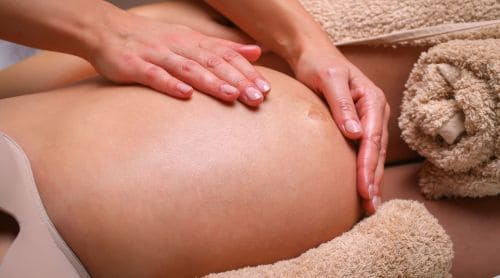
When massaging the abdomen, remember that the rectus abdominis muscles lengthen and separate. Direct your strokes toward the midline of the body to support these stretching muscles. Never perform techniques that stretch the broad and round ligaments, as these are already under immense strain. For the legs and feet, you can apply normal pressure as long as there are no signs of varicose veins, edema, or deep vein thrombosis. Avoid specific acupressure points around the ankle, such as SP6 and BL60, to prevent stimulating uterine contractions.
Ready to elevate your career with prenatal massage?
Learning how to properly treat pregnant clients empowers you to build a more diverse, resilient massage practice. By understanding physiological changes and mastering modified techniques, you provide immense value to mothers navigating a challenging physical journey. Prenatal massage allows you to expand your client base while making a profound difference in your community.
If you feel stuck in your current career trajectory, investing in specialty education can provide the boost you need. Take the time to practice side-lying positioning, study the contraindications, and refine your intake process. Start incorporating these safe, effective strategies into your practice to unlock your full potential as a massage therapist.
Frequently asked questions about prenatal massage
What are the absolute contraindications for prenatal massage?
Absolute contraindications include severe abdominal pain, loss of amniotic fluid prior to 37 weeks, strong contractions, uterine bleeding, suspected thrombosis, and signs of preeclampsia like visual disturbances or severe facial swelling. Always refer clients with these symptoms to a healthcare provider immediately.
Can you massage a pregnant client’s abdomen?
Yes, you can massage the abdomen, but you must use caution. Use gentle strokes that move toward the midline to support separated abdominal muscles. Avoid any deep pressure or techniques that pull on the extended uterine ligaments.
Why is the left side-lying position recommended for pregnant clients?
The left side-lying position minimizes pressure on the inferior vena cava, preventing supine hypotension. It also maximizes renal plasma flow and removes the heavy weight of the baby from the client’s lower back.
Are there specific acupressure points to avoid during pregnancy?
Yes, avoid direct pressure on points that may stimulate the uterus or pelvis. Key points to avoid include LI4 (web of the thumb), GB21 (top of the trapezius), and several points around the ankles and feet like SP6, BL60, and K1.