Quick answer: AI in physical therapy handles data-heavy tasks like movement analysis, documentation, and remote monitoring. It speeds up assessments, drafts personalized exercise plans, and flags at-risk patients. What it can’t do is replace clinical judgment, hands-on skill, or the human connection that drives recovery.

You entered this field to help people move better, feel better, and live better. You didn’t sign up to drown in documentation or crunch data sets by hand. That’s exactly where AI in physical therapy is starting to earn its place.
AI has moved from a futuristic idea to a daily tool in many clinics. For physical therapists and PT assistants, this shift brings real opportunity. Some clinicians worry that machines might take over their jobs, but the reality looks far more collaborative. AI acts as an assistant that manages repetitive work, freeing you to focus on the human side of care.
Let’s look at where AI already fits into PT workflows, what the evidence supports, what it can’t do, and which skills stay firmly human.
Explore unlimited CE options with Elite’s Physical Therapy Passport Membership
Where does AI already fit into PT workflows?
AI shows up in several parts of a typical clinic day. It isn’t running the show. It’s handling the busywork so you can spend more time treating patients.
Here’s where you’ll likely see it first:
- Movement analysis: Computer vision tools use cameras on standard tablets or smartphones to track joint angles and movement patterns in real time. They can catch small deviations in gait or squat form that might slip past you during a packed schedule.
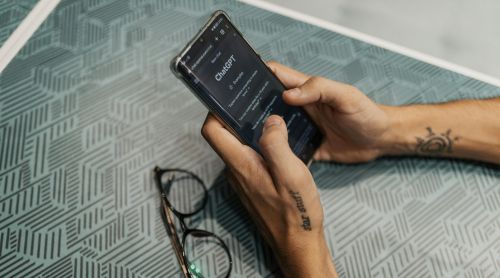
- Documentation and resources: Chatbots like ChatGPT can draft patient handouts, home safety checklists, and education materials in minutes. You review and adjust rather than build from scratch.
- Treatment planning: AI can analyze a patient’s specific deficits and generate a tailored exercise program from a library of thousands of movements. You tweak the draft instead of starting cold.
- Remote monitoring: Wearable sensors and AI-powered apps track how patients perform their home exercises between visits.
AI can support resource generation, assessment selection, and goal development. These are the tasks that eat into your day without directly touching a patient.
Related CE course for physical therapists: A Guide to Using AI to Enhance Clinical Service Delivery
What does the evidence support?
The strongest case for AI in physical therapy centers on precision and engagement. Objective data backs up your clinical eye.
Traditional goniometric measurements and visual gait analysis lean heavily on the clinician’s experience. Human eyes are skilled, but they have limits. New computer vision technology can detect minute deviations in a patient’s gait that a busy session might hide. This gives you three clear wins:
- Objectivity: Hard numbers validate your clinical intuition.
- Patient buy-in: When patients see their movement data on a screen, they understand their dysfunction better.
- Efficiency: Automated tracking speeds up assessment, leaving more time for treatment.
Engagement improves too. Adherence to home exercise programs is often the biggest hurdle in rehab. AI-powered apps use gamification, turning exercises into points and levels through the patient’s phone camera. Correct movement earns rewards, which keeps patients consistent.
Predictive analytics adds another layer. AI can flag patients at risk of dropping out or missing their goals. When the system alerts you that progress has stalled, you can step in early, adjust the plan, or open a conversation about barriers to recovery.

What can AI not do in the clinic?
This is where you stay in charge. AI is a consultant, not a decision-maker.
Rehabilitation is an art as much as a science. A machine can calculate the optimal load for a rotator cuff repair based on tissue healing timeframes. It can’t read the fear on a patient’s face when they’re afraid to move. It can’t grasp the psychosocial stressors shaping someone’s pain experience.
Here are several limitations worth remembering:
- Lack of personalization: AI works from general data, not the specific person in front of you.
- Lack of context: It misses the subtle cues you pick up in seconds.
- Lack of accountability: AI doesn’t carry a license, so responsibility stays with you.
- Potential for bias: Outputs reflect the data the system was trained on.
Two ethical points deserve special attention. First, informed consent. Clients should be told when AI is used in their assessment or treatment. Second, confidentiality. Never enter protected health information into these systems. AI is a supplement to traditional resources, not a replacement for a licensed, certified professional.
Leaning too hard on AI carries a quieter risk as well: overly standardized care that overlooks the unique human in the room.
Which skills stay human?
The parts of your job that matter most can’t be automated. That’s good news for your career. These skills remain yours alone:
- Hands-on treatment: Manual therapy relies on touch, feel, and real-time adjustment.
- Empathy and rapport: Reading a patient’s mood, easing their fear, and building trust are deeply human tasks.
- Clinical judgment: You weigh data against context and make the final call.
- Data interpretation: As monitoring grows, you’ll spend more time reading trends and communicating feedback digitally.
Remote monitoring does change your daily rhythm. You may spend part of the day reviewing AI-generated adherence reports rather than delivering manual therapy. That shift asks for new skills, including interpreting data over time and helping less tech-savvy patients troubleshoot their devices. Think of it as an expansion of your role, not a replacement of it.
Move forward with confidence
AI in physical therapy isn’t about replacing you. It’s about raising the standard of care. By handling data analysis, precise measurement, and adherence tracking, AI frees you to do what you do best: connect with patients, offer empathy, and use your hands to heal.
Change can feel daunting, but it also fuels growth. Staying informed positions you as a forward-thinking leader in your field. Want to build practical, hands-on confidence with these tools? Explore a continuing education course on using AI to enhance clinical service delivery, and start integrating this technology on your own terms.
Frequently asked questions
Will AI replace physical therapists?
No. AI handles data, measurement, and repetitive tasks, but it can’t perform manual therapy, read emotional cues, or make clinical decisions. It works best as an assistant that frees you to focus on patient care.
Is it safe to use AI tools with patient data?
Only with care. Never enter protected health information (PHI) into AI systems, since doing so risks HIPAA violations. You should also tell patients when AI is part of their assessment or treatment, which respects informed consent.
What can AI actually do for a PT right now?
AI can draft patient education handouts, generate personalized exercise plans, analyze movement with computer vision, track home exercise adherence, and flag patients at risk of stalling. You review and refine each output.
Do I need coding skills to use AI in my practice?
No. Using AI is a communication skill, not a coding skill. Frameworks like RISEN (Role, Instructions, Steps, End goal, Narrowing) help you write clear prompts that get useful results.
What are the main risks of relying on AI in rehab?
The biggest risks are depersonalized care, built-in bias, missing context, and data privacy concerns. Treat AI as a consultant that informs your decisions rather than one that makes them for you.