Community health nursing focuses on the health of populations rather than a single patient in a single bed. It takes the familiar nursing process, assessment, planning, intervention, and evaluation, and applies it to neighborhoods, schools, and entire communities instead of one room at a time.
That shift in scope matters because so much of what determines a patient’s health happens outside the clinic walls. A perfectly managed hospital discharge can unravel quickly if a patient goes home to food insecurity, unsafe housing, or no reliable transportation to make it to follow-up appointments.

The social determinants that drive the work
The Healthy People 2030 initiative groups these outside-the-clinic factors into five categories:
- Neighborhood and built environment
- Economic stability
- Healthcare access and quality
- Education access and quality
- Social and community context
Community health nurses assess all five when they’re building a realistic care plan for a patient or a population.
Someone without access to a grocery store that sells fresh produce faces a much harder path to managing diabetes than someone who can simply walk to one. Someone without reliable childcare may miss appointments that have nothing at all to do with how much they value their own health, and everything to do with logistics outside their control.
Related CE course for nurses: Understanding Social Determinants of Health
The economic reality behind the statistics
Roughly 11.5% of the U.S. population was living in poverty as of 2022. Research shows the health gap that follows is stark. Men in the top 1% of income can expect to live nearly 15 years longer than men in the bottom 1%. That gap traces back to unequal access to healthcare, exercise, and healthy food, not just genetics or individual choices.
Nearly one in five Americans lacks health insurance. Most of them are poor or near-poor, which means they tend to delay care until a condition becomes severe rather than catching it early through routine visits. Community health nurses see this pattern constantly, and it shapes how they prioritize outreach in the neighborhoods they serve.
What the role looks like day to day
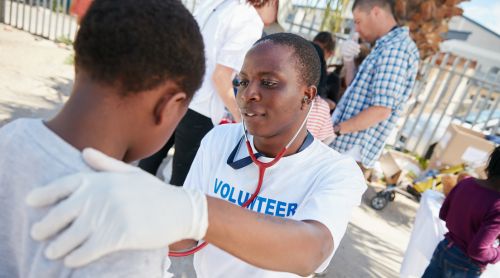
Community health nurses run immunization clinics, screen for chronic disease risk factors, and connect patients with housing or food assistance programs as part of routine practice. They also spend a lot of time on education, teaching a family how to manage a new diagnosis in a way that actually fits their daily life and available resources, rather than handing over a generic printed handout.
Home visits, school-based health programs, and partnerships with local nonprofits are common settings for this work. The job asks nurses to think like case managers, educators, and advocates all at once, often within the same single visit.
Related CE course for nurses: Effective Communication in Healthcare
Food insecurity as a clinical concern
Access to affordable, healthy food shapes chronic disease management more than many providers realize. A patient managing hypertension or diabetes who lives in an area without a nearby grocery store carrying fresh produce faces a genuinely harder path to following dietary recommendations, regardless of how motivated they are.
Community health nurses often screen for food insecurity directly and connect families with food banks, meal programs, or nutrition assistance benefits as part of a comprehensive care plan, rather than treating diet as a matter of willpower alone.
Why this specialty is growing
Hospitals and health systems increasingly measure success by readmission rates and population health outcomes, not just what happens during a single inpatient stay. That shift has put a spotlight on community health nursing as a way to close the gap between clinical treatment and real-world, sustained results.
Value-based care models, which tie reimbursement to outcomes rather than volume, have only accelerated demand for nurses who can address the social factors that traditional inpatient care doesn’t reach.
Building the skill set
Nurses moving into this specialty benefit from formal training in the social determinants of health. Spotting these risk factors takes a different kind of assessment than a typical physical exam, along with different documentation and referral skills than most nurses learn in a hospital-focused curriculum.
This kind of training also helps nurses avoid the trap of viewing social determinants as someone else’s problem to solve. A nurse who can recognize food insecurity or housing instability during a routine visit and knows exactly which local resource to point a family toward, adds real value to a care team regardless of the specific unit they work on.