Laser hair removal has become one of the most requested aesthetic procedures worldwide. With the promise of long-term hair reduction and minimal downtime, it’s a go-to treatment in dermatology clinics, med spas, and plastic surgery offices. But despite its popularity, delivering consistent, safe, and effective results requires more than just the right machine. It demands a clear understanding of how laser hair removal works.
Whether you’re just starting out or refining your technique, this guide covers the essential concepts and clinical knowledge every professional should know.
Related: Fundamentals of Laser Hair Removal

What makes laser hair removal work?
At the core of laser hair removal is the principle of selective photothermolysis, a term first introduced by Anderson and Parrish in 1983. This concept refers to the precise targeting of pigmented structures—in this case, melanin within the hair shaft—by using specific wavelengths of light.
When melanin absorbs laser energy, it generates heat that selectively damages the surrounding hair follicle while sparing adjacent tissues. Over time, this damage leads to significant reduction or cessation of hair growth.
It is important to note that successful treatment requires a high contrast between the hair color and the surrounding skin. Dark, coarse hairs on lighter skin tones remain the ideal candidates, although advances in technology have broadened treatment options for a wider range of skin types.
Learn the hair growth cycles
Hair growth follows a cyclical pattern consisting of three distinct phases.
- Anagen (growth phase): The hair is actively growing and connected to the follicle.
- Catagen (regression phase): The hair detaches from the follicle.
- Telogen (resting phase): The follicle is inactive, and hair shedding may occur.
Laser hair removal is most effective during the anagen phase when the follicle is richly supplied with melanin and physically attached to the hair shaft. However, at any given time, only a percentage of hair follicles are in the anagen phase, which is why multiple treatment sessions—typically six to eight, spaced four to six weeks apart—are necessary to achieve substantial results.
Choosing the right laser for the right patient
Different lasers work better for different skin tones and hair types. The most commonly used ones include:
- Alexandrite (755 nm): Fast and powerful; best for lighter skin tones
- Diode (800–810 nm): Very effective across a wide range of skin types
- Nd: YAG (1064 nm): The safest choice for darker skin tones due to its deeper penetration and lower melanin absorption
Intense Pulsed Light (IPL) is another option, but it’s not technically a laser. It uses broad-spectrum light and tends to be less specific. Still, it can work well for some patients, especially when combined with good cooling systems.
Who makes a good candidate for laser hair removal?
Laser hair removal works best on people with light skin and dark hair, but modern lasers like Diode and Nd: YAG have expanded the treatment window for people with medium to dark skin tones.
Before treatment, a good consultation includes:
- Assessing skin type (Fitzpatrick scale)
- Evaluating hair color and thickness
- Reviewing any medical conditions (like PCOS or hormonal imbalances)
- Asking about sun exposure, tanning, or medications
Patients should avoid waxing, plucking, or threading for at least 4 weeks before the session. Shaving, on the other hand, is encouraged 24–48 hours before treatment to minimize the risk of surface burns.
What happens during the treatment?
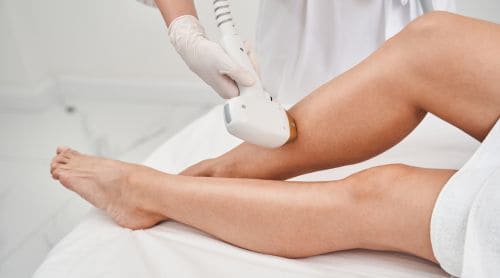
During the procedure, the laser pulses over the treatment area in short bursts. Patients often describe the feeling as a mild snap or sting, like a rubber band flicking the skin. Most devices have built-in cooling mechanisms or use external cooling (such as cold air or gel) to reduce discomfort and protect the outer skin.
When performed correctly, laser hair removal is safe. However, like all treatments, it comes with some risks:
- Temporary redness or swelling
- Hyperpigmentation or hypopigmentation, especially in darker skin if settings aren’t appropriate
- Blisters or burns (rare, usually due to incorrect settings or sun-exposed skin)
- Paradoxical hypertrichosis, a rare side effect where hair growth increases in nearby areas
To reduce the risk of complications:
- Always adjust the laser settings based on the patient’s skin tone and hair type
- Avoid treating tanned or sunburned skin
- Use cooling and test patches when unsure
How long do the results last?
Laser hair removal leads to long-term hair reduction, but it is not always permanent. Most patients see a 70–90% reduction in treated hair, but occasional touch-ups may be needed once or twice a year.
Factors that influence results include:
- Hormones (conditions like PCOS can cause regrowth)
- Genetics
- Treatment area (e.g., facial hair often regrows faster)
- Device used and treatment protocol
What’s new in the field of laser hair removal?
The technology keeps improving. Some of the latest advances include:
- Dual-wavelength machines, combining Alexandrite and Nd: YAG in one device for greater flexibility
- Faster pulse repetition rates, making full-body treatments quicker
- Fractional lasers and RF hybrids, being explored for finer hair and tough-to-treat cases
- Home-use devices, which are low-power and not as effective but gaining popularity
There’s also growing interest in AI-guided treatment platforms that could one day auto-adjust energy levels in real time based on skin response.
Turning first-time clients into loyal regulars
Laser hair removal isn’t just a treatment — it’s an ongoing relationship. Many clients will be coming in for multiple sessions over several months, which gives you a valuable window to build trust, rapport, and long-term loyalty. Your technical skill is important, of course, but so is the way clients feel in your care.
Start with a thorough, honest consultation. Don’t overpromise results or minimize the commitment involved. Instead, clearly explain how many sessions are typically needed, what they can expect between visits and the importance of proper aftercare.
Another way to deepen trust is by documenting progress. Take consistent before-and-after photos and walk clients through the changes you’re seeing. Visual proof can be incredibly motivating and helps reinforce the value of the treatment plan. It also sets you apart from providers who skip this step.
Finally, don’t underestimate the power of follow-up. A quick check-in after each session to ask about side effects, answer questions, or remind them about post-care builds goodwill. It shows you’re invested in their outcome, not just their invoice.
When you combine clinical excellence with genuine care and communication, clients come back, and they refer others. That’s how you build not just a business, but a reputation.