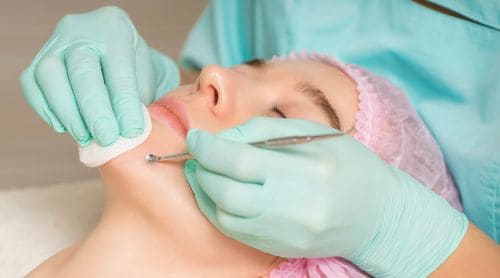
Executive summary: Facial extractions are professional skin care procedures that involve clearing clogged or compacted pores to remove oil buildup and dead skin cells. Licensed estheticians use specialized tools like comedone extractors, curettes, or manual techniques to safely extract blackheads and whiteheads, resulting in a clearer, brighter complexion.

As a salon professional, helping clients achieve their best skin is a top priority. Weighing over eight pounds, the human skin is the largest organ of the body. It serves as a vital waterproof barrier against heat, cold, UV rays, and contaminants. Because it faces so much daily stress, the skin often needs professional help to stay healthy and clear.
Pores easily become clogged with oil and dead skin cells, leading to blackheads and whiteheads. These common issues can make the skin appear dull and tired. While many clients try to tackle these blemishes at home, DIY methods often lead to irritation or scarring. This is where your expertise as a licensed skin care professional becomes essential.
By mastering the art of facial extractions, you can offer a highly sought-after service that transforms your clients’ complexions. This comprehensive guide will explain the science behind the procedure, the tools you need, and the best practices to keep your clients safe and glowing.
Related CE course for salon professionals: Performing Facial Extractions
What are the main benefits of facial extractions for clients?
Facial extractions offer a reliable way to manage and remove debris and bacteria from the skin. When performed regularly by a licensed esthetician, they become a cornerstone of a solid skin care regimen. The primary goal is to clear impacted pores, which immediately improves the skin’s brightness and clarity.
For clients struggling with acne-prone or oily skin, extractions provide targeted relief. Removing compacted oil helps prevent future breakouts and allows the skin to absorb topical skin care products more effectively. Over the weeks following the procedure, clients will notice continued improvement as their skin sheds dead cells and fully absorbs the benefits of moisturizers and serums.
Even clients with normal or dry skin can benefit from occasional extractions. Routine facials reduce stress, boost circulation, and provide anti-aging benefits. By clearing away the microscopic blockages that dull the complexion, you help your clients maintain a healthy, youthful glow.
What tools do skin care professionals use for facial extractions?
To perform a safe and effective facial extraction, you must use the right tools for the specific type of blemish. Using the incorrect tool can cause unnecessary pain and damage the client’s skin.
Licensed estheticians use specialized facial extraction tools like:
- Comedone extractors
- Curettes
- Manual techniques
When should you use manual extraction?
Manual extraction is the most common method and works best for pores that are only mildly clogged. To perform a manual extraction, wrap your gloved index fingers in an astringent-soaked, lint-free wipe. You then apply gentle pressure on each side of the extraction site. Always use the sides of your fingertips, never your fingernails, to avoid breaking the skin.
How do cotton swabs help clear blackheads?
Medical-grade cotton swabs are highly effective for blackhead removal. Use a three-step process to gently coax the blackhead out. First, apply pressure to either side of the blackhead using two cotton swabs. If the blemish does not release, gently move the swabs from side to side to loosen the blockage. If the impurity remains stuck, stop trying and save the treatment for a future appointment.
How do comedone extractors and curettes work?
A comedone extractor is a small metal tool with loops on the ends. It allows you to apply even pressure from all sides of a blackhead or whitehead, resulting in a quick extraction that minimizes damage to the surrounding tissue. A curette is a similar thin metal tool used with a gentle scraping or scooping motion to clear mildly blocked pores.
Are lancets safe to use during facial extractions?
A lancet is a sharp, pointed tool used specifically to pierce the dead skin layer that forms over a whitehead (closed comedone). You hold the lancet parallel to the client’s face and use a horizontal motion to clear the site. Because the tool is sharp, you must avoid using a downward pricking motion. Note that many state cosmetology boards prohibit the use of lancets, so you must verify your local regulations before utilizing this tool.
How do you safely perform facial extractions in the salon?
Proper technique and infection control are non-negotiable when dealing with broken skin and extracted sebum. Follow these professional steps to ensure a safe procedure.
How do you prepare the skin for an extraction?
First, remove surface impurities by cleansing the skin with a soap-free cleanser. For oily skin, a gentle salicylic acid-based exfoliant works well. Next, carefully observe the skin under a magnifying glass for any signs of irritation. Soften the skin by applying a warm towel or steam treatment. Steam opens the pores and makes the extraction process much more comfortable for the client.
What are the proper steps for the extraction process?
Put on clean, protective nitrile or vinyl gloves. Limit the active extraction process to a maximum of 20 minutes to prevent excessive inflammation. Address the most visible and easily accessible blackheads and whiteheads first. Check in with your client regularly to ensure they are comfortable with the pressure you are applying.
How do you soothe the skin after a facial extraction?
Once you finish the extractions, apply an astringent to the entire area with a lint-free wipe to clear away residual bacteria. Follow up with a gentle, non-comedogenic moisturizer to hydrate the skin. You can also apply a cool gel mask to provide immediate relief and reduce post-procedure redness.
When should you avoid performing facial extractions on a client?
While facial extractions are highly beneficial, they are not suitable for every skin condition. Attempting to extract the wrong type of blemish can push bacteria deeper into the dermis and cause permanent scarring.
Never attempt an extraction on areas of the skin that are red, inflamed, or infected. If a client has cystic acne, avoid using comedone extractors or manual pressure entirely. Cystic acne requires medical intervention, and you should refer these clients to a board-certified dermatologist.
Additionally, you must modify your preparation steps for clients with specific conditions like rosacea or eczema. These clients should not receive steam treatments, as the heat can cause excessive dryness and exacerbate their symptoms. Use a warm towel instead to gently prep their skin.
What are the best practices for post-extraction skin care?
The hours and days following an extraction are critical for the healing process. Many clients accidentally damage their freshly extracted skin by continuing their normal, harsh routines.
Educate your clients on proper aftercare before they leave your salon. Instruct them to avoid washing their face for the rest of the day. For the next 72 hours, they must avoid all makeup, exfoliating scrubs, and alcohol-based toners. Heavy, coconut-based moisturizers can trap bacteria in the newly opened pores and should also be avoided.
Advise them to use only gentle, non-comedogenic cream cleansers applied lightly with their fingertips and rinsed with lukewarm water. Because the skin will be highly sensitive to UV rays, they should stay out of direct sunlight or use a titanium dioxide sunscreen to block UVA and UVB rays.
Elevate your skin care services with safe facial extractions
Mastering facial extractions allows you to provide a higher level of care and visible results for your clients. By understanding the anatomy of the skin, selecting the appropriate professional tools, and strictly adhering to infection control protocols, you empower your clients to achieve the clear, healthy complexion they desire. Continue to educate yourself on your state’s cosmetology regulations and always prioritize client safety to build a thriving, trusted salon business.
Frequently asked questions for salon professionals
Who can legally perform facial extractions?
In most states, a specialized license is required to perform facial extractions. Licensed estheticians, cosmetologists, registered dermatologists, and specific medical professionals hold the necessary training to safely manipulate the skin and use professional-grade extraction tools.
How long should a facial extraction session last?
Skin care professionals should limit the active extraction portion of a facial to 20 minutes per session. Prolonging the procedure increases the risk of skin inflammation, redness, and unnecessary discomfort for the client.
What are the main risks of improper facial extractions?
If performed incorrectly, facial extractions can cause short-term swelling, bruising, broken capillaries, and long-term scarring. Applying incorrect pressure can push bacteria deeper into the skin, leading to severe infections and increased acne breakouts.
What is the difference between blackheads and whiteheads?
A blackhead is an open comedone caused by excess oil that oxidizes and turns dark at the skin’s surface. A whitehead is a closed comedone where a thin layer of dead skin forms over the impacted sebum and bacteria, making it generally more difficult to extract.
How do you properly sanitize tools after a facial extraction?
All reusable metal implements must be sanitized using a hospital-grade, EPA-registered disinfectant or an autoclave. An autoclave uses UV rays and high heat to kill bacteria, fungus, and viruses. All disposable items, like gauze and lancets, must be thrown away immediately after a single use.