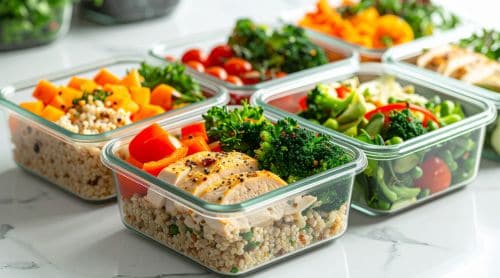
You know the feeling. It’s the end of the day, you’ve just walked in the door, and you hear the dreaded question: What’s for dinner? After a busy shift, sometimes the last thing you want to worry about is making dinner—never mind making something healthy. Balancing your nutritional needs and a demanding work schedule may feel impossible, but with a little planning, it can be done.
Meal prepping is a powerful tool to maintain a balanced diet, save time, and reduce stress during the workweek. Never tried it before? This guide offers practical tips to help you get started.

Meal prepping 101: What is it?
Meal prepping is the practice of preparing meals or ingredients in advance. By planning your meals ahead of time, you can ensure you’re getting the right nutrients to stay energized through long shifts. It also helps you manage your calorie intake and avoid unhealthy impulse buys from the hospital cafeteria or vending machines.
The advantages go well beyond physical health. Prepping your meals at home saves considerable money compared to buying take-out. It also frees up precious time during your workdays. Instead of rushing to cook after a tiring shift, you can enjoy a ready-made, delicious meal.
Related CE course for nurses: Nutrition: Understanding Macronutrients for Weight Loss, 2nd Edition
The benefits of meal prepping
- Saves time: Having meals ready to go means you spend less time cooking and cleaning during your busy week. This frees up your evenings for rest, relaxation, and time with loved ones.
- Controls nutrition: When you cook your own food, you control the ingredients. This allows you to manage portion sizes, calories, and nutrient intake to meet your specific health goals.
- Saves money: Eating out or buying pre-packaged meals can be expensive. Meal prepping at home significantly cuts down on food costs.
- Reduces impulse eating: With healthy meals on hand, you’re less likely to reach for unhealthy snacks or fast food when hunger strikes.
Related CE course for nurses: Diets and Dietary Modifications
5-day meal prepping guide for busy nurses
Here’s a sample five-day plan to get you started. Each suggestion includes ideas for omnivore, vegetarian, and gluten-free diets. Remember to adjust portion sizes to fit your nutritional needs.
Breakfast
Whether you work day or night shifts, breakfast is crucial for starting your day on the right foot. The following meal options are quick, easy, and can be made in batches.
- Omnivore: Mix eggs, sausage, spinach, cheese and bake in a muffin tin. Nutrition-packed and endlessly customizable, these breakfast muffins are easy to grab and reheat.
- Vegetarian: Make up a large batch of overnight oats with chia seeds, berries, and a scoop of protein powder.
- Gluten-free: Bake a tray of gluten-free banana-oatmeal bars. Customize with your favorite nuts and fruits for the perfect breakfast on the go.
Lunch
Even if you have to snag bites while charting, your mid-shift meal should be satisfying enough to power you through the end of the workday. The lunches below are easy to pack and enjoy in a hurry.
- Omnivore: Create a Mason jar salad with grilled chicken, mixed greens, cherry tomatoes, and a light vinaigrette. Don’t forget to keep the dressing separate to prevent sogginess.
- Vegetarian: Cook up a large pot of lentil soup at the beginning of the week. Lentils are high in protein, high in fiber, and low in fat, making them a hearty and nutritious option for any vegetarian meal. Plus, lentils reheat well!
- Gluten-free: Throw some seasoned quinoa, your favorite roasted vegetables, black beans, grilled chicken, and avocado together for the ultimate (healthy) southwest burrito bowl. Pack the avocado separately to keep it fresh, and don’t forget a side of salsa.
Dinner
After a long day, the last thing you want to do is spend an hour sweating over the stove in pursuit of a healthy dinner. These quick, low-stress dinners are both delicious and easy to prepare ahead of time.
- Omnivore: Bake up a batch of turkey meatballs at the beginning of the week. Serve them with whole-wheat pasta or zucchini noodles, your favorite marinara sauce, and a quick bagged salad.
- Vegetarian: Microwaveable broccoli, carrots, and peas cook in as little as three minutes, and make a great foundation for a tofu stir-fry. Batch cook the rice or noodles ahead of time for a quick assembly.
- Gluten-free: No time for dishes? Bake a sheet pan dinner with salmon, broccoli, and sweet potatoes. Drizzle with olive oil, lemon juice, and herbs before roasting.
Start your meal prep journey
Remember: You can’t pour from an empty cup. Meal prepping isn’t just good planning; it’s a fundamental part of self-care. By investing a few hours in meal prep on your day off, you’ve set yourself up for a week of healthy, stress-free eating. When you don’t have to worry about what’s for dinner, you give yourself more time to spend time with the people you love.