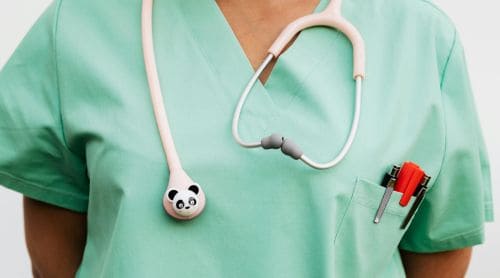
Nurses are the backbone of the healthcare system. You work long hours, manage high-stress situations, and care for patients when they are most vulnerable. While your skills and dedication have always been essential, the uniform you wear has changed dramatically over time.
Tracing the evolution of nursing scrubs reveals how the profession has shifted from religious roots to a modern focus on hygiene, functionality, and comfort. Let’s take a walk through history to see how we got to the comfortable scrubs you wear today.
Related CE course for nurses: Economics and Care Systems for Today’s Healthcare Leader

Early nursing uniforms: The influence of the nun’s habit
Before nursing became a secular profession, most care for the sick was provided by religious orders. Nuns were the primary nurses, and their clothing reflected their dedication to God and service.
The earliest nursing uniforms were essentially modifications of the nun’s habit. These outfits were floor-length, heavy, and restrictive. They typically featured:
- Long gowns: Dresses that covered everything from the neck to the floor.
- Aprons: Large white aprons worn over the gown to protect it from stains (a necessity before modern laundry machines!)
- Caps: Head coverings that kept hair out of the way and symbolized humility.
Florence Nightingale, the founder of modern nursing, maintained this modest style in the mid-19th century. Her students at the Nightingale School of Nursing wore long dresses with aprons and caps. While these uniforms established a professional identity, they certainly weren’t designed for running a code blue.
The turn of the century: A shift toward hygiene
As the 20th century approached, the medical field began to understand germ theory. This scientific advancement had a massive impact on the evolution of nursing scrubs and uniforms. The bulky, floor-length dresses of the past were seen as unsanitary carriers of infection. Hemlines began to rise slightly, though still ankle-length, to keep fabric off dirty floors. The crisp white apron remained a staple, symbolizing cleanliness and purity.
During World War I, functionality became more important. Nurses needed to move quickly on the battlefield and in crowded hospitals. Uniforms became simpler and easier to wash. Pockets were added to aprons, which represented a game-changer for carrying essential tools.
By the 1940s and 50s, hemlines rose further, sleeves became shorter, and fabrics became lighter. The iconic white dress and nurse’s cap were the standard, representing the professionalism and discipline of the era. However, keeping those white uniforms pristine was a constant struggle for nurses dealing with the messy reality of patient care.
Related CE course for nurses: Effective Communication in Healthcare
The introduction of “scrubs”: A revolution in comfort
The real turning point in the evolution of nursing scrubs happened in the mid-20th century. Doctors and surgeons began wearing “surgical greens” to reduce eye strain caused by the bright lights of the operating room against white linens.
By the 1970s and 80s, this trend spread to nursing. The strict dress codes relaxed, and hospitals began prioritizing comfort and utility over tradition. The nurse’s cap, which was difficult to keep clean and often got in the way, was largely phased out.
In its place came the early version of the modern scrub set:
- V-neck tops: Easy to put on and take off.
- Drawstring pants: Comfortable and adjustable for various body types.
- Color variations: While green and blue were standard for surgery, other departments began adopting different colors to identify roles or simply add variety.
This shift was a massive win for nurses. Finally, nurses had clothing that allowed for a full range of motion, was easy to launder, and didn’t require constant bleaching to look professional.
Modern day nursing scrubs: Fashion meets function
Today, the evolution of nursing scrubs has reached a new peak. You no longer have to choose between looking good and feeling comfortable. Modern scrubs are designed with high-tech fabrics that are moisture-wicking, antimicrobial, and stretchable.
Additionally, the “box” shape of the past has been replaced with tailored fits that suit all body shapes and sizes. You have endless options:
- Jogger pants for an athletic look.
- Printed tops to bring a smile to pediatric patients.
- Zippered pockets to keep your phone and instruments secure.
Today’s scrubs celebrate your individuality while respecting the demands of your job. They are a far cry from the heavy wool dresses of the 19th century, representing a profession that values science, mobility, and the wellbeing of the people doing the work.
Whether you prefer classic blue or a bright pattern, your uniform is a symbol of your expertise and compassion. You have the freedom to choose what works best for you, empowering you to focus on what matters most: providing excellent care to your patients.