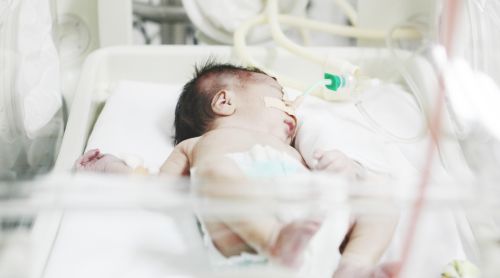
Respiratory distress in newborns is one of the most significant challenges faced in neonatal intensive care units globally. High-frequency ventilation (HFV) has emerged as a notable advancement in treatment options, particularly for neonates suffering from severe respiratory failure who do not respond adequately to traditional mechanical ventilation methods. HFV provides specific physiological benefits by minimizing lung injury while ensuring effective gas exchange.

Related CE course: High-Frequency Ventilation of the Newborn, 3rd Edition
Principles of high-frequency ventilation
High-frequency ventilation encompasses various mechanical ventilation techniques characterized by respiratory rates generally exceeding 150 breaths per minute. This is combined with small tidal volumes that are usually lower than the anatomical dead space. The primary objective of HFV is to enhance gas exchange while mitigating the risk of ventilator-induced lung injury, a critical concern for the delicate lungs of neonates. HFV operates through several physiological mechanisms, including:
- Convective transport: Rapid, small breaths enhance the movement of gases within the lungs.
- Pendelluft Effect: This mechanism involves the unequal filling and emptying of alveoli, facilitating the redistribution of gases among lung units.
- Taylor dispersion: Rapid airflow leads to improved mixing of gases.
- Molecular diffusion: Gas exchange at the alveolar level is primarily driven by diffusion due to the low tidal volumes used in HFV.
By minimizing large pressure swings and maintaining relatively stable mean airway pressures, HFV effectively reduces the risks of barotrauma, volutrauma, and atelectotrauma, which are significant contributors to bronchopulmonary dysplasia.
Types of high-frequency ventilation
There are four primary types of HFV, each utilizing different delivery systems and operational modes:
High-Frequency Oscillatory Ventilation (HFOV)
HFOV is the most widely utilized form of HFV in neonates. It delivers small gas volumes at a constant mean airway pressure, operating at frequencies typically between 3 to 15 Hz (180 to 900 breaths per minute). The oscillations are generated by a piston or diaphragm, where both inspiration and expiration are active processes that allow for precise control of alveolar ventilation and help to prevent air trapping.
High-Frequency Jet Ventilation (HFJV)
Utilizing brief, high-velocity pulses of gas delivered through a specialized endotracheal tube adapter, HFJV permits conventional ventilator breaths between jet pulses. This method is particularly beneficial for conditions involving air leak syndromes, such as pulmonary interstitial emphysema or bronchopleural fistula. Unlike HFOV, expiration in HFJV occurs passively.
High-Frequency Flow Interruption Ventilation (HFFI)
In HFFI, volume is delivered at high frequencies by interrupting a background flow or pressure generator. This mechanism represents a category of action rather than a specific outcome and includes ventilators in the high-frequency positive pressure ventilation category. Exhalation occurs passively, with potential rates reaching high frequencies.
High-Frequency Percussive Ventilation (HFPV)
HFPV combines oscillatory breaths with conventional positive-pressure ventilation. Devices from Percussionaire, such as the Volumetric Diffusive Respirator-4, facilitate this approach. By integrating high-frequency percussive ventilation with conventional breaths, HFPV maximizes the benefits of both methods.
Indications for HFV in neonates
HFV is primarily indicated for newborns with severe respiratory failure unresponsive to conventional mechanical ventilation. Common indications for HFV include:
- Respiratory Distress Syndrome (RDS): Particularly prevalent in preterm infants, HFV can enhance oxygenation and ventilation while minimizing lung injury.
- Persistent Pulmonary Hypertension of the Newborn (PPHN): HFV can be administered alongside inhaled nitric oxide to improve oxygenation.
- Meconium Aspiration Syndrome (MAS): HFV may assist in clearing airway obstructions and enhancing lung mechanics.
- Congenital Diaphragmatic Hernia (CDH): HFV is utilized to reduce barotrauma and maintain gentle ventilation approaches.
- Pulmonary air leak syndromes: HFJV is especially effective in minimizing additional alveolar damage while supporting gas exchange.
Benefits of HFV in neonatal care
The main advantages of HFV arise from its lung-protective ventilation strategy. This includes lung protection by minimizing the large volume swings associated with conventional mechanical ventilation. Minimizing volume swings reduces the risk of barotrauma and volutrauma. This is a crucial factor for premature infants with underdeveloped and surfactant-deficient lungs.
Improved oxygenation and ventilation by promoting better oxygenation by maintaining lung recruitment at optimal mean airway pressures while effectively managing carbon dioxide elimination through adjustments in frequency and amplitude. Some studies also indicate that the lung-protective properties of HFV may help lower the long-term risk of bronchopulmonary dysplasia in very low birth weight infants.
Clinical evidence and outcomes
Numerous randomized controlled trials and meta-analyses have examined the effectiveness of HFV in neonates. These studies focus comparison to conventional mechanical ventilation. A notable study, the UK Oscillation Study (UKOS), was a large multicenter trial that evaluated HFV against CMV in preterm infants.
The study concluded that there was no significant difference in survival rates without bronchopulmonary dysplasia between the two groups. However, some sub-analyses indicated potential benefits in lung function for those who underwent HFV. This was evidenced by improved outcomes at school age.
The COIN trial (Continuous Positive Airway Pressure or Intubation at Birth) and the SUPPORT trial (Surfactant Positive Airway Pressure and Pulse Oximetry Randomized Trial) primarily focused on non-invasive strategies but also included HFV as a rescue therapy. These trials underscored the importance of gentle ventilation and minimizing early intubation, which indirectly supports the role of HFV in lung protection during ventilation.
In summary, the literature indicates that while HFV is not uniformly superior to CMV in all cases, it serves as a crucial alternative for neonates who do not respond to conventional ventilation or have specific medical conditions such as air leaks or severe hypoxemia.
Practical considerations and management
Effectively managing HFV necessitates specialized expertise due to its complex settings and physiological implications. Key considerations include:
- Setting initial parameters. Mean airway pressure is generally set higher than in CMV to ensure adequate lung recruitment. The frequency is adjusted based on the required CO₂ removal. Lower frequencies enhance tidal volume and CO₂ clearance. Amplitude regulates the oscillatory pressure, directly influencing CO₂ removal.
- Monitoring: Intensive monitoring of oxygenation, ventilation, and hemodynamics is critical. Regular blood gas analysis, chest radiographs to assess lung inflation, and sometimes transcutaneous CO₂ monitoring are essential components of therapy management.
- Weaning and transition: After the infant stabilizes, the weaning process involves gradual reductions in MAP and amplitude while ensuring adequate gas exchange. This can lead to a transition to CMV or extubation based on clinical improvement.
Limitations and challenges
While HFV offers several advantages, it also has its limitations. Availability due to the cost of equipment can be limited. The HFV devices are specialized and generally more expensive than conventional ventilators. The effective implementation of HFV requires staff to be well-trained in advanced ventilator strategies. These trained staff may be limited in smaller hospitals.
The potential hemodynamic effects of elevated mean airway pressures can reduce venous return and cardiac output, especially in hypovolemic infants. Although short-term improvements are evident, further research is needed to understand long-term outcomes related to neurodevelopment and lung function to fully evaluate the benefits versus risks of this mode of ventilation.
Conclusion
HFV is a valuable tool in neonatal intensive care. It functions as a lung-protective strategy for managing severe respiratory failure in newborns. The small tidal volumes coupled with rapid respiratory rates of HFV can minimize ventilator-induced lung injury while ensuring effective gas exchange.
Although it is not universally superior to conventional ventilation, HFV remains essential in specific clinical scenarios and as a rescue option. Advancements in neonatal care continue. Ongoing improvement in HFV strategies and technologies holds promise for enhancing outcomes in the most vulnerable patient populations.