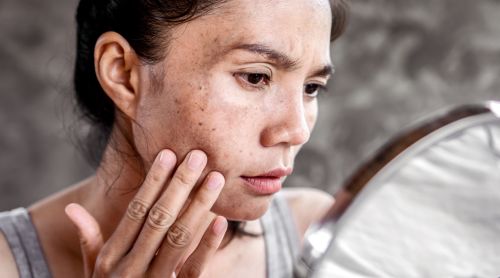
Quick answer: Pollution damages skin by triggering oxidative stress, breaking down collagen, and disrupting the skin’s barrier function. Over time, exposure to pollutants like particulate matter, UV radiation, and blue light leads to premature aging, hyperpigmentation, dryness, and increased skin cancer risk. Protective skincare and smart daily habits can significantly reduce this damage.
Every day, your clients walk into your salon or spa carrying more than stress and a packed schedule. They’re carrying the invisible weight of the air around them. Particulate matter, ground-level ozone, cigarette smoke, blue light, and heavy metals are all landing on their skin, hair, and nails, and the effects go deeper than most people realize.

According to the World Health Organization (WHO), more than 1 in 4 Americans live with unhealthy air conditions (American Lung Association, 2022). Air pollution contributes to up to 6 million premature deaths worldwide each year (Environmental Defense Fund, 2022). While those numbers speak to systemic health risks, the story for skin, hair, and nails is just as compelling—and is something you, as a salon professional, are uniquely positioned to address.
This post breaks down how pollution affects the body’s largest organ, what it does to hair and nails, and how you can help your clients protect themselves.
Related CE course for salon professionals: The Effects of Environmental Pollution on Skin
How does pollution damage the skin?
Pollution affects the skin in two main ways: surface exposure and deep penetration. Some particles, like larger dust and soot, land on the skin and cause irritation and chemical damage. Others, particularly fine particles smaller than PM2.5, are so small they penetrate the skin’s layers and enter the bloodstream (EPA, 2019).
Once inside, these pollutants trigger a cascade of problems. They generate reactive oxygen species (ROS), which are unstable molecules that attack healthy cells. This oxidative stress interferes with the skin’s lipids, proteins, and DNA. According to Professor Jean Krutmann, particulate matter directly accelerates skin aging by impairing barrier function, stimulating inflammation, and disrupting the extracellular matrix (Dupont et al., 2013).
The pollutants with the strongest evidence for skin damage include:
- Particulate matter (PM): Fine particles that penetrate deep into skin layers
- Polycyclic aromatic hydrocarbons (PAHs): Lipophilic compounds from exhaust and combustion that easily breach the skin barrier
- Volatile organic compounds (VOCs): Gases from paints, cleaning products, and cigarette smoke that cause allergic reactions and DNA damage
- Heavy metals: Arsenic, cadmium, mercury, and chromium, all of which react with skin tissue
- Ground-level ozone: A colorless gas formed when nitrogen oxides and VOCs react in sunlight
- UV radiation: A known carcinogen that contributes to both melanoma and nonmelanoma skin cancers
Long-term exposure to these pollutants leads to eczema, psoriasis, atopic dermatitis, acne, hyperpigmentation, collagen breakdown, and accelerated aging (Araviiskaia et al., 2019).
What does pollution do to skin barrier function?
The epidermis acts as the body’s first line of defense against UV radiation, pathogens, bacteria, and environmental chemicals. But repeated exposure to high pollution levels wears this barrier down.
When the barrier is compromised, skin loses moisture more rapidly, becomes more reactive, and is less able to protect itself. Pollutants penetrate more easily into weakened skin, creating a cycle that’s hard to break. Clients may notice increased dryness, tightness, redness, and sensitivity, which are all signs that the barrier is struggling.
This is why barrier-supporting treatments and ingredients are central to any antipollution skincare protocol.
How does light pollution affect the skin?
Light pollution isn’t just about outdoor streetlights. It includes blue light from digital screens, UV radiation from the sun, and infrared radiation. All three affect the skin, and all three are harder to avoid than ever.
What does blue light do to skin?
Blue light, also called high-energy visible light (HEVL), ranges from 400 to 500 nm. It penetrates further into the skin than UV light, reaching subcutaneous adipose tissue. Research indicates blue light causes oxidative stress, collagen degradation, and persistent hyperpigmentation (Coats, 2021).
Smartphones, computers, tablets, and televisions all emit blue light. So does sunlight. For clients who work long hours in front of screens, blue light exposure is nearly constant.
How does UV radiation damage skin?
UV radiation is a well-documented carcinogen. UVA penetrates deep into the dermis, causing DNA mutations, photoaging, and pigmentation. UVB hits the epidermis, causing sunburn and increasing melanoma risk. According to the Cancer Council of Australia, approximately 95% of melanomas and 99% of nonmelanoma skin cancers are caused by excess UV radiation.
What about infrared radiation?
Infrared radiation generates free radicals in both the epidermis and dermis, reaching deeper than UV. Long-term exposure impairs barrier function, reduces the skin’s antioxidant capacity, and breaks down collagen-binding proteins, leading to wrinkles and hyperpigmentation (Dupont et al., 2013).
What does indoor pollution do to skin?
Many salon professionals focus on outdoor pollution, but indoor air can actually be 100 times more polluted than outdoor air, according to the WHO. Your clients spend roughly 90% of their time indoors, where they’re exposed to mold, bacteria, phthalates, synthetic fragrances, VOCs from cleaning products, and even scented candles (Spiegel, 2019).
Indoor pollution contributes to skin itching, dryness, stinging, allergic reactions, hypersensitivity, and atopic-prone skin conditions (Timms, 2019).
Simple changes can make a real difference for your clients:
- Vacuum high-traffic areas with a HEPA filter to reduce dust, pollen, and pet dander
- Use fragrance-free or naturally scented laundry products
- Limit plug-in air fresheners, which emit more than 100 VOCs
- Open windows regularly to allow fresh air to circulate
- Use indoor plants as natural air purifiers
- Install a high-quality air purifier in frequently used spaces
How does pollution affect hair and nails?
While the course material focuses primarily on skin, the same pollutants that damage skin also affect hair and nails, both of which are extensions of skin tissue.
Particulate matter and VOCs settle on the scalp and hair shaft, stripping natural oils and disrupting the moisture balance. Heavy metals like lead and mercury can accumulate on hair follicles, interfering with growth cycles and causing increased breakage and dullness. Oxidative stress from free radicals weakens the keratin structure of both hair and nails, making them brittle and prone to damage.
For nail technicians, clients who live or work in high-pollution environments may present with:
- Brittle, thin nails that break easily
- Discoloration or dullness at the nail plate
- Slower nail growth due to oxidative cellular damage
- Dry, reactive cuticles
For hair stylists, common pollution-related concerns include:
- Dry, brittle strands with rough cuticles
- Scalp sensitivity or increased dandruff
- Color fading or uneven tones caused by oxidative damage
- Reduced shine and elasticity
Recommending barrier-protecting hair treatments, antioxidant-rich scalp serums, and gentle, sulfate-free cleansers can help clients combat these effects.
What antipollution ingredients should you look for?
The antipollution skincare market was valued at $9.07 billion in 2018, with continued projected growth driven by rising consumer awareness (Grand View Research, 2022). As a salon professional, knowing your ingredients gives you a real edge when recommending products.
Key antipollution ingredients to know:
- Vitamin C (L-ascorbic acid): Stimulates collagen and elastin production while neutralizing free radicals
- Niacinamide (vitamin B3): Suppresses melanin, protects against UV damage, and strengthens the skin barrier by increasing ceramide levels
- Snow mushroom (Tremella fuciformis): Holds up to 500 times its weight in water, inhibits melanin production, and restores hydration
- Malachite: A copper-rich mineral that inhibits pollution-induced superoxide anions at a rate exceeding 98%
- Resveratrol: A polyphenol antioxidant that protects the skin’s surface against UV radiation and oxidative damage
- Moringa oleifera extract: Used to encourage the elimination of pollution particles from the skin
- Green tea extract: Polyphenols like EGCG offer anti-inflammatory and anticancer properties, protecting against UV-induced damage
- Marigold extract: Contains lutein with blue light–absorbing capabilities and reduces ROS-induced oxidative stress
How can salon professionals protect clients from pollution damage?
Your role as a salon professional goes beyond treatments. You’re also an educator. Clients trust your expertise, and that trust gives you the opportunity to make a lasting impact on their skin, hair, and nail health.
Here’s how to put that into practice:
- Assess the environment: Ask clients about their daily environment. Do they commute in heavy traffic? Work from home near high-pollution indoor sources? This context shapes your product and treatment recommendations.
- Focus on barrier support: Prioritize treatments that strengthen the skin barrier. Ingredients like ceramides, niacinamide, and horehound extract help rebuild and protect.
- Recommend antioxidant-rich products: Antioxidants are the frontline defense against free radical damage. Guide clients toward serums and moisturizers with vitamin C, resveratrol, and green tea extract.
- Address blue light exposure: With screen time at an all-time high, blue light protection is relevant for virtually every client. Recommend products with marigold extract or lutein-based formulas.
- Encourage SPF every day: UV radiation combines with other pollutants to cause greater skin damage. Daily broad-spectrum SPF is non-negotiable.
Keep growing your expertise
Understanding what pollution does to skin is just the beginning. Estheticians, hair stylists, and nail technicians who stay informed on environmental skin science are better equipped to serve their clients and stand out in a competitive industry.
Elite Learning offers flexible, self-paced cosmetology continuing education courses, including in-depth content on topics like environmental pollution and skin health. You can complete your CE on your schedule, from anywhere, and feel confident your courses meet state board requirements.
Expand what you know. Elevate what you offer.
Explore cosmetology CE courses at Elite Learning
Frequently asked questions
What does pollution do to skin?
Pollution damages skin by generating reactive oxygen species (ROS) that trigger oxidative stress. Over time, this breaks down collagen and elastin, disrupts the skin barrier, and causes inflammation, hyperpigmentation, dehydration, and accelerated aging. Fine particles smaller than PM2.5 can penetrate the skin layers and enter the bloodstream, compounding the damage.
How can you protect skin from pollution?
Protecting skin from pollution involves a combination of barrier-strengthening skincare, antioxidant-rich products, and daily SPF. Ingredients like vitamin C, niacinamide, resveratrol, and green tea extract help neutralize free radicals. Cleansing thoroughly each evening removes pollutant buildup from the skin’s surface. Reducing indoor pollution through air purifiers, fragrance-free products, and good ventilation also helps.
Does indoor pollution affect skin?
Yes. According to the WHO, indoor air can be up to 100 times more polluted than outdoor air. VOCs from cleaning products, synthetic fragrances, mold, and bacteria all contribute to skin irritation, dryness, allergic reactions, and long-term sensitivity. Clients who spend most of their time indoors are still at significant risk.
Does blue light from screens damage skin?
Research indicates that blue light (400–500 nm) causes oxidative stress, collagen degradation, and persistent hyperpigmentation (Coats, 2021). Blue light penetrates deeper into the skin than UV light, reaching subcutaneous tissue. Protective products containing lutein, marigold extract, or blue light–filtering formulas can help reduce this damage.
How does pollution affect hair and nails?
Pollution strips natural oils from the hair shaft, weakens keratin structure, and can cause breakage, dullness, and scalp sensitivity. Heavy metals from polluted environments may accumulate near follicles and disrupt hair growth cycles. For nails, oxidative damage leads to brittleness, discoloration, and slowed growth.
What are the best antipollution ingredients for skin?
Some of the most effective antipollution ingredients include vitamin C (L-ascorbic acid), niacinamide, resveratrol, green tea extract (EGCG), malachite, snow mushroom, moringa extract, and marigold extract. These ingredients work by neutralizing free radicals, strengthening the skin barrier, and reducing inflammation caused by environmental stressors.